 Home / News / Industry News / Choosing the Right Automotive Sealant Adhesive – Applications, Selection Guide, and Common Failure Analysis
 2026-04-14
Selecting the right automotive sealant adhesive is a critical decision in vehicle design, manufacturing, and maintenance. With a wide range of adhesive chemistries and performance levels available, engineers and procurement specialists must carefully evaluate application requirements before making a choice.
A mismatch between adhesive type and application environment can lead to sealing failure, structural weakness, or long-term durability issues.
This article provides a comprehensive guide to selecting automotive sealant adhesives, explores key application scenarios, and analyzes common failure causes and prevention strategies.
Before selecting an adhesive, it is essential to evaluate the working environment and functional requirements.
Key factors include:
Each factor influences the type of adhesive required.
Requires high elasticity and strong adhesion to glass and metal frames. Polyurethane-based adhesives are commonly used.
Used in doors, roofs, and trunk areas to prevent water and air leakage.
Must withstand high temperatures, oil exposure, and vibration.
Requires waterproofing, thermal insulation, and flame resistance.
Protects against corrosion, gravel impact, and road salt exposure.
Best for:
Advantages:
Best for:
Advantages:
Best for:
Advantages:
Best for:
Advantages:
Understand temperature, humidity, UV exposure, and chemical contact.
Different materials require different adhesion mechanisms.
High-stress areas require structural adhesives, while low-stress areas may use flexible sealants.
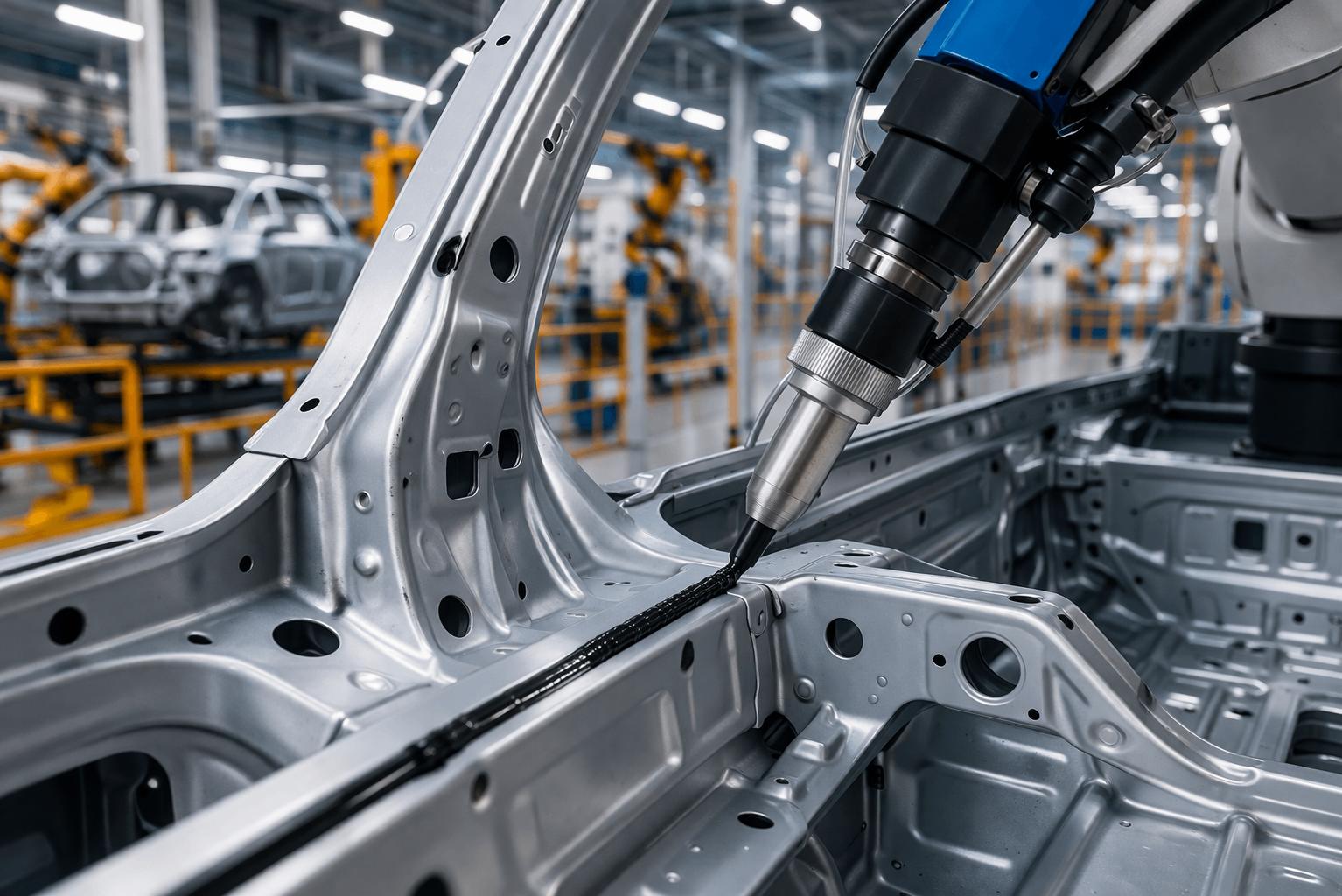
Consider curing time, application method, and automation compatibility.
Ensure compliance with automotive OEM specifications and environmental regulations.
Occurs when bonding to the substrate is weak due to poor surface preparation.
Solution: Proper cleaning, priming, and surface activation.
The adhesive itself breaks under stress.
Solution: Choose higher-strength formulations.
UV radiation, moisture, and chemicals can degrade adhesive performance.
Solution: Use UV-resistant and chemically stable formulations.
Extreme temperature cycles can cause brittleness.
Solution: Select adhesives with high thermal elasticity.
To maximize performance:
Adhesives must bond effectively with aluminum, carbon fiber, and composites.
Battery safety requirements are driving innovation in flame-retardant sealants.
OEMs prefer low-emission, recyclable adhesive systems.
AI-based dispensing and quality control systems improve precision.
Choosing the right automotive sealant adhesive is not just a material decision—it is a critical engineering strategy that impacts vehicle safety, durability, and performance.
By understanding application requirements, adhesive types, and failure mechanisms, manufacturers can significantly improve product reliability and reduce long-term maintenance risks.
As automotive technology continues to evolve, the role of advanced sealant adhesives will only become more essential in shaping the future of mobility.



 Language
 Email
Email WhatsApp