 Home / News / Industry News / High-Strength Damping Bonding Solution in Industrial Manufacturing – Revolutionizing Electronics, Machinery, and Structural Assembly
 2026-04-14
Industrial manufacturing is undergoing a major transformation driven by automation, miniaturization, and high-performance material integration. In this evolving landscape, the high-strength damping bonding solution has become a key enabling technology across multiple sectors including electronics, precision machinery, aerospace components, and industrial equipment assembly.
Unlike conventional adhesives, this solution delivers both structural bonding strength and vibration damping capability, making it ideal for environments where mechanical stability and noise control are equally important.
This article explores how this advanced bonding system is reshaping industrial production processes and improving product reliability across industries.
At its core, a high-strength damping bonding solution combines two critical functions:
This is achieved through specially engineered polymer matrices that exhibit viscoelastic properties, allowing the material to deform under stress and dissipate energy as heat rather than transmitting vibration.
Modern industrial systems require extreme precision. Even small vibrations can lead to:
A damping bonding solution stabilizes structural joints and reduces micro-vibrations.
Factories and production facilities often suffer from high noise levels. By integrating damping adhesives into machine housings and panels, manufacturers can:
A high-performance solution must deliver:
In electronics, miniaturization increases sensitivity to vibration. A high-strength damping bonding solution is used for:
This improves device reliability and extends service life.
CNC machines, robotics, and automated production lines benefit significantly:
In aerospace systems, weight reduction and vibration control are critical:
Large machinery often generates significant vibration. Damping adhesives are used in:
By reducing mechanical stress and vibration, equipment lasts longer and requires fewer repairs.
Compared to welding or bolting, adhesive bonding:
Modern equipment often combines:
A high-strength damping bonding solution allows seamless integration.
Industrial adoption depends heavily on process compatibility:
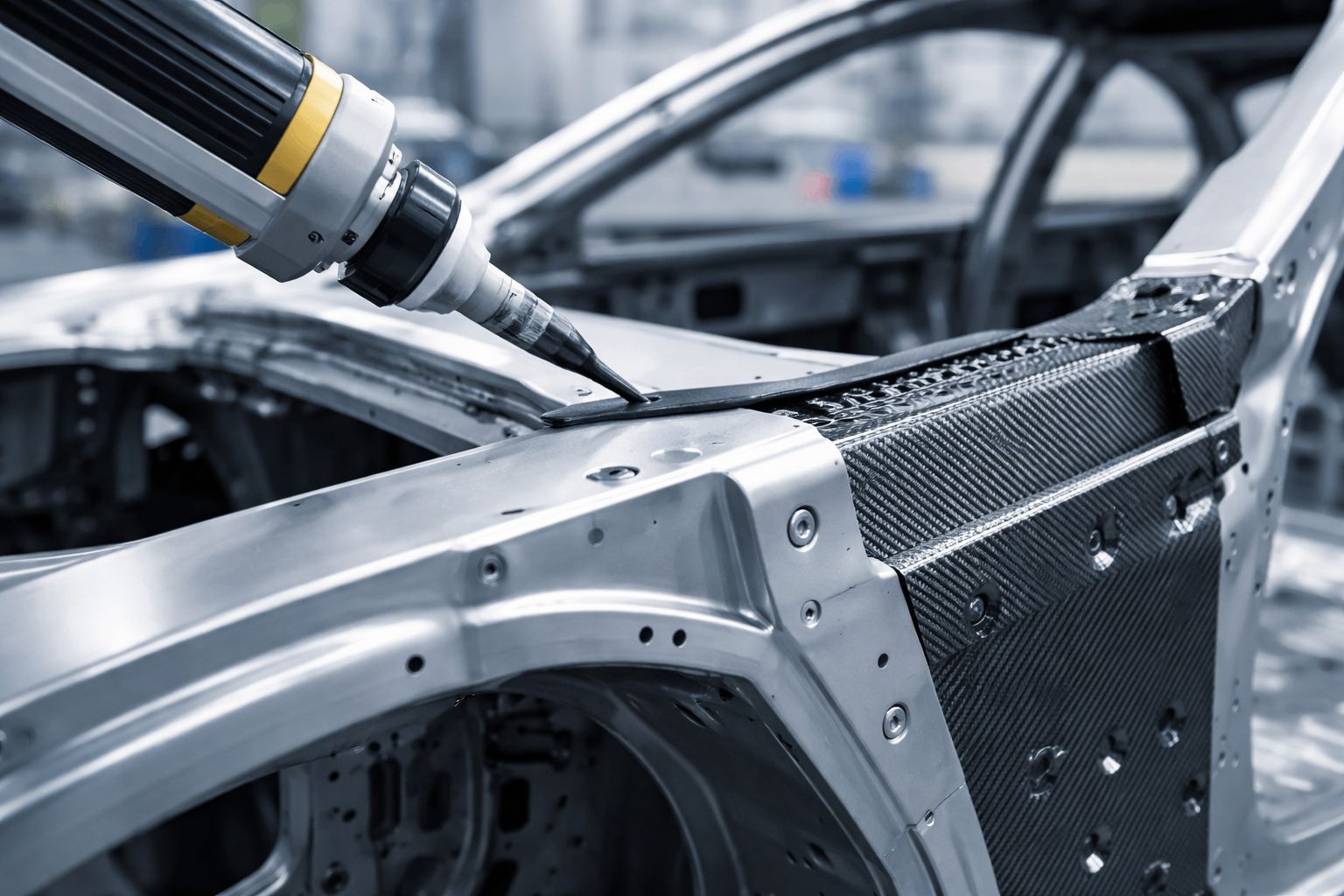
The adhesive can be applied using:
Depending on formulation:
Manufacturers must monitor:
Despite its advantages, engineers must address:
Different substrates may require surface treatment such as:
Adhesives must resist:
Incorrect curing or application can reduce performance significantly.
The future of high-strength damping bonding solutions is highly promising:
The high-strength damping bonding solution is redefining industrial manufacturing by combining structural reliability with vibration control in a single material system. Its ability to enhance precision, reduce noise, and improve product durability makes it indispensable in modern production environments.
As industries continue to evolve toward automation, electrification, and high-precision engineering, this advanced bonding technology will play an increasingly important role in shaping the future of manufacturing efficiency and product performance.


 Language
 Email
Email WhatsApp