 Home / News / Industry News / Ensuring Compliance and Certification When Buying Automotive Body Adhesives
 2026-03-04
In the modern automotive industry, Automotive Body Adhesives play a critical role in vehicle assembly, performance, and safety. With the increasing use of lightweight materials, multi-material assemblies, and electric vehicles, adhesives have become a cornerstone in automotive manufacturing. However, buying and using automotive adhesives isn’t simply about picking a strong glue — compliance with industry standards and proper certification is essential to ensure safety, quality, and long-term reliability. This article explores the importance of compliance, the key certifications involved, and best practices for automotive manufacturers and suppliers.
Traditionally, vehicles relied heavily on mechanical fasteners and welding for structural integrity. However, modern cars increasingly incorporate adhesives to bond metals, plastics, composites, and lightweight materials like aluminum and carbon fiber. Automotive body adhesives offer multiple advantages:
Structural Strength — High-performance adhesives can enhance vehicle rigidity and safety, particularly in crash zones.
Noise, Vibration, and Harshness (NVH) Reduction — Adhesives absorb vibration and reduce rattling, improving passenger comfort.
Weight Reduction — By replacing heavier mechanical fasteners and welds, adhesives help manufacturers meet fuel efficiency and emissions targets.
Corrosion Resistance — Certain adhesives act as a barrier against moisture and chemicals, extending the lifespan of vehicle components.
Given their structural and functional importance, ensuring that adhesives meet regulatory standards is no longer optional — it’s a critical requirement.
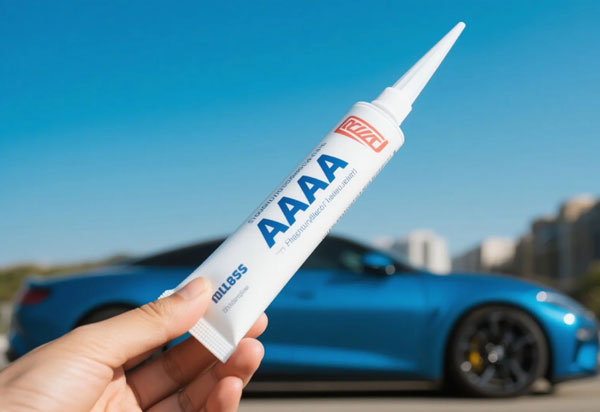
Compliance in the context of automotive adhesives refers to meeting both regulatory requirements and industry standards. Regulatory compliance ensures that adhesives used in vehicles are safe for production, use, and disposal. Industry standards, on the other hand, provide benchmarks for performance, reliability, and quality control.
REACH Compliance — The European Union’s REACH (Registration, Evaluation, Authorization, and Restriction of Chemicals) regulation restricts hazardous chemicals in manufacturing materials. Adhesives must comply with REACH to ensure they are free of harmful substances like lead, cadmium, and certain phthalates.
RoHS Directive — The Restriction of Hazardous Substances (RoHS) directive applies to electrical components and adhesives used in vehicles with electronic systems. It ensures adhesives do not contain hazardous substances that could harm the environment or end users.
Automotive OEM Requirements — Vehicle manufacturers (OEMs) often have their own material specifications. For instance, Ford, BMW, and Toyota require adhesives that meet their specific mechanical, thermal, and chemical performance standards. Non-compliant adhesives may result in rejected batches or warranty issues.
Automotive adhesives must meet several international standards to guarantee performance and safety:
ISO 9001 — Quality Management Systems — Adhesive manufacturers should have ISO 9001 certification to ensure consistent production quality, traceability, and effective quality control processes.
IATF 16949 — Automotive Quality Management — IATF 16949 is a widely recognized standard specifically for automotive suppliers. Adhesives manufactured under this standard comply with strict automotive quality requirements, including defect prevention and continuous improvement.
ASTM Standards — ASTM International defines test methods for adhesives, including tensile strength, shear strength, and peel resistance. Compliance with ASTM standards ensures adhesives perform reliably under mechanical and thermal stress.
SAE Standards — The Society of Automotive Engineers (SAE) sets standards for adhesives used in automotive body assembly, structural bonding, and NVH reduction. SAE compliance is often a prerequisite for OEM approvals.
UL Certification — UL (Underwriters Laboratories) certification verifies that adhesives meet fire safety and chemical resistance standards. This is particularly important for adhesives used near heat-sensitive components or battery packs in electric vehicles.
Purchasing uncertified adhesives can expose manufacturers to multiple risks:
Safety Risks — Substandard adhesives can fail in critical applications, compromising vehicle integrity in crashes.
Regulatory Violations — Non-compliance can lead to fines, product recalls, and legal liabilities.
Warranty Claims — Adhesive failure may result in warranty claims, damaging reputation and profitability.
Supply Chain Issues — OEMs and tier-one suppliers often require proof of certification before approving materials.
By insisting on certified adhesives, manufacturers protect their brand, comply with regulations, and ensure high-quality end products.
Begin by assessing potential adhesive suppliers:
Certifications — Confirm ISO 9001, IATF 16949, UL, and other relevant certifications.
Experience — Suppliers with a history of serving automotive OEMs are more likely to meet performance standards.
Traceability — Ensure that raw materials, formulations, and production processes can be fully traced.
Ask suppliers for official documents to validate compliance:
Safety Data Sheets (SDS) for REACH and RoHS compliance
Certification copies (ISO, IATF, UL, ASTM)
Test reports for mechanical, thermal, and chemical performance
Even with certifications, independent testing is recommended, particularly for:
Shear and Peel Strength Tests — To verify bonding performance
Thermal Aging Tests — To ensure adhesives withstand temperature fluctuations
Corrosion Resistance Tests — Especially for adhesives used in exterior vehicle components
Different areas of the vehicle require different adhesives:
Structural Adhesives — Used for load-bearing joints and crash zones
Sealing Adhesives — Provide waterproofing and NVH reduction
Panel Bonding Adhesives — For joining aluminum, steel, or composite panels
Specialty Adhesives — For high-temperature areas or EV battery modules
Ensure the selected adhesive meets the specific mechanical and thermal requirements of its application.
Regulations and OEM standards evolve. Maintain ongoing monitoring:
Stay updated on changes to REACH, RoHS, and local regulations
Periodically audit suppliers to confirm continued compliance
Maintain records of certifications, test reports, and batch traceability
Challenge 1: Variability Between Suppliers
Adhesive formulations can differ slightly between manufacturers, affecting performance.
Solution: Standardize supplier evaluation and perform batch testing before mass production.
Challenge 2: Global Supply Chain Complexity
Suppliers across different countries may follow different regulatory frameworks.
Solution: Require international certifications and conduct due diligence on import/export compliance.
Challenge 3: Documentation Management
Tracking multiple certifications and test reports can be overwhelming.
Solution: Implement a digital compliance management system to store and update all documentation.
With the rise of electric vehicles, lightweight composites, and automated assembly lines, compliance requirements are becoming stricter:
Eco-Friendly Adhesives — Manufacturers increasingly demand adhesives with low VOCs and minimal environmental impact.
Smart Adhesives — Adhesives with embedded sensors for structural monitoring will require new standards.
Global Standardization — Efforts are underway to harmonize automotive adhesive standards across regions, simplifying cross-border procurement.
Ensuring compliance and certification when buying automotive body adhesives is not just a regulatory obligation — it is a strategic business decision. Certified adhesives ensure safety, durability, and performance, while protecting manufacturers from legal liabilities and quality issues. By verifying supplier credentials, requesting compliance documentation, conducting independent testing, and continuously monitoring standards, automotive manufacturers can confidently select adhesives that meet both industry and OEM requirements.
In a competitive automotive market where vehicle performance, safety, and sustainability are paramount, compliance is a cornerstone of responsible adhesive procurement. Choosing certified adhesives today helps manufacturers avoid costly failures tomorrow while supporting innovation in lightweight and electric vehicle technologies.




 Language
 Email
Email WhatsApp