 Home / News / Industry News / High-Strength Damping Bonding Solution in Automotive Engineering – Enhancing Safety, NVH, and Structural Integrity
 2026-04-14
In modern automotive engineering, the demand for lighter, safer, and quieter vehicles has never been higher. As electric vehicles (EVs) and next-generation mobility systems evolve, traditional mechanical fastening methods such as welding, bolts, and rivets are increasingly being replaced or supplemented by advanced adhesive technologies. Among these innovations, the high-strength damping bonding solution has emerged as a critical material system that not only provides exceptional structural adhesion but also significantly improves vibration control and noise reduction.
This dual-function capability—bonding strength combined with damping performance—makes it a transformative technology in automotive manufacturing. From body-in-white assembly to battery pack sealing, the applications are expanding rapidly across the industry.
A high-strength damping bonding solution is a specialized adhesive or composite material designed to:
Unlike conventional adhesives that focus solely on bonding strength, this solution integrates viscoelastic properties that allow it to convert vibrational energy into minimal heat, effectively reducing NVH (Noise, Vibration, and Harshness).

One of the biggest challenges in automotive design is NVH control. As engines become quieter (especially in EVs), previously masked noises such as road vibration, wind noise, and structural resonance become more noticeable.
A high-strength damping bonding solution helps by:
Automakers are aggressively pursuing lightweight design strategies to improve fuel efficiency and extend EV range. However, lightweight materials like aluminum and composites introduce new bonding challenges.
This solution enables:
A high-performance damping bonding system must balance multiple engineering requirements:
It must withstand:
The viscoelastic nature allows it to:
Automotive environments require stability under:
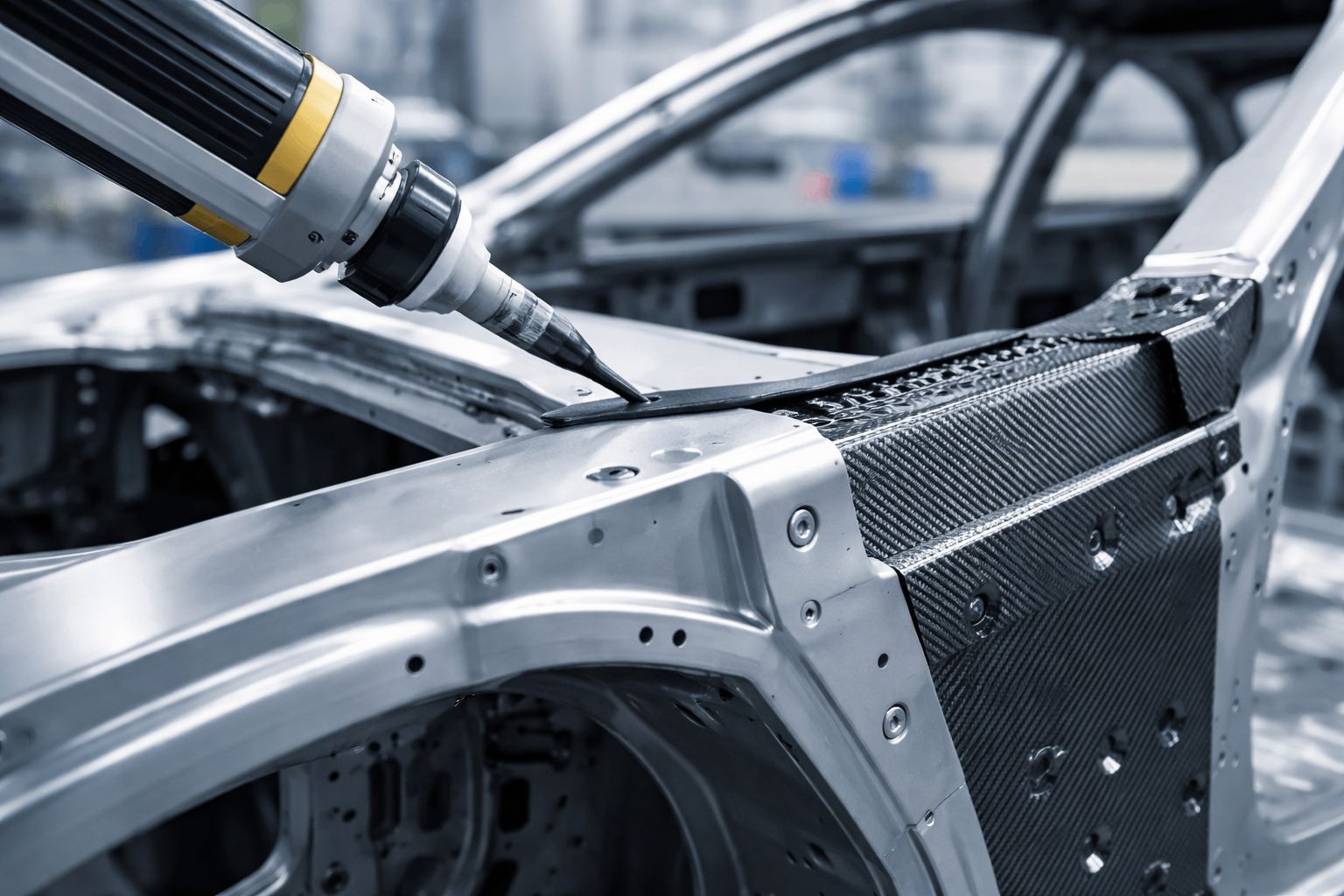
In BIW structures, the adhesive is used to bond:
This improves rigidity while reducing weight and noise transmission.
In electric vehicles, battery safety is critical. A high-strength damping bonding solution is widely used to:
It is also applied in:
These applications help reduce vibration transfer from the road to the cabin.
The evolution of the high-strength damping bonding solution is closely linked to:
EV platforms require advanced bonding due to:
Future adhesives may include:
Eco-friendly formulations will focus on:
When selecting a high-strength damping bonding solution, engineers must evaluate:
Proper selection ensures optimal balance between performance and manufacturability.
The high-strength damping bonding solution is no longer just an auxiliary material—it has become a core engineering component in modern automotive design. By combining structural adhesion with vibration damping, it enables manufacturers to build lighter, quieter, safer, and more durable vehicles.
As automotive technology continues to evolve, especially with the rise of electric mobility, the importance of advanced bonding systems will only increase. Companies that adopt and optimize these solutions early will gain a significant competitive advantage in performance, efficiency, and customer satisfaction.


 Language
 Email
Email WhatsApp