 Home / News / Industry News / Automotive Structural Adhesives for Mixed-Material Joining Solutions
 2026-03-24
The automotive industry is rapidly evolving under the pressure of stricter emission regulations, electrification, and the demand for lighter, more efficient vehicles. One of the most transformative technologies supporting this shift is automotive structural adhesives for mixed-material joining solutions. These advanced bonding systems are enabling manufacturers to design and assemble vehicles using a combination of metals, composites, and polymers in ways that were not feasible with traditional joining methods.
In this article, we will explore how structural adhesives are used in mixed-material joining, their advantages, key applications, and why they are becoming essential in modern automotive engineering.
Automotive structural adhesives are high-performance bonding materials designed to join load-bearing components in vehicles. Unlike standard adhesives, they are engineered to withstand:
High mechanical stress
Thermal cycling
Vibrations and impact loads
Harsh environmental conditions
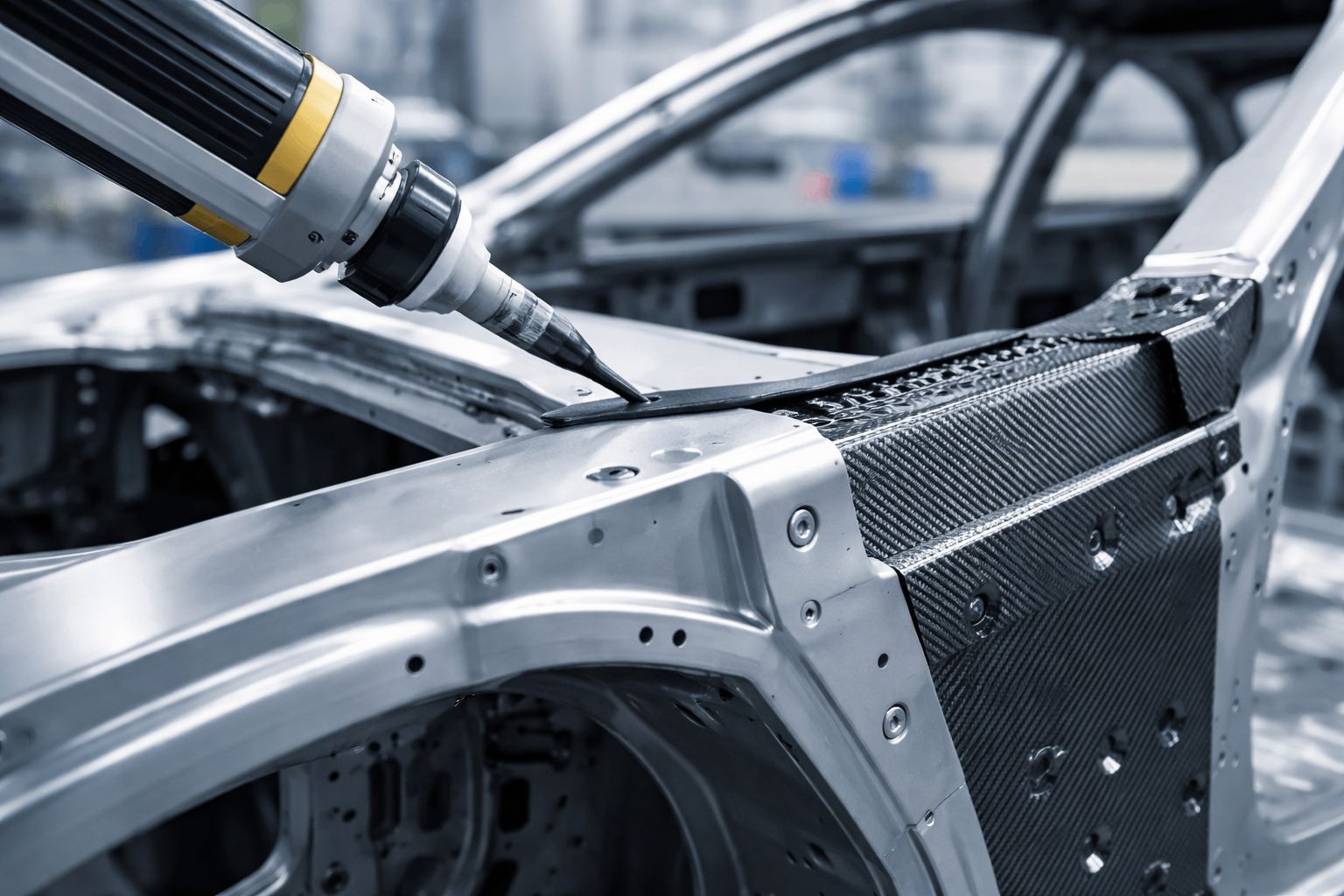
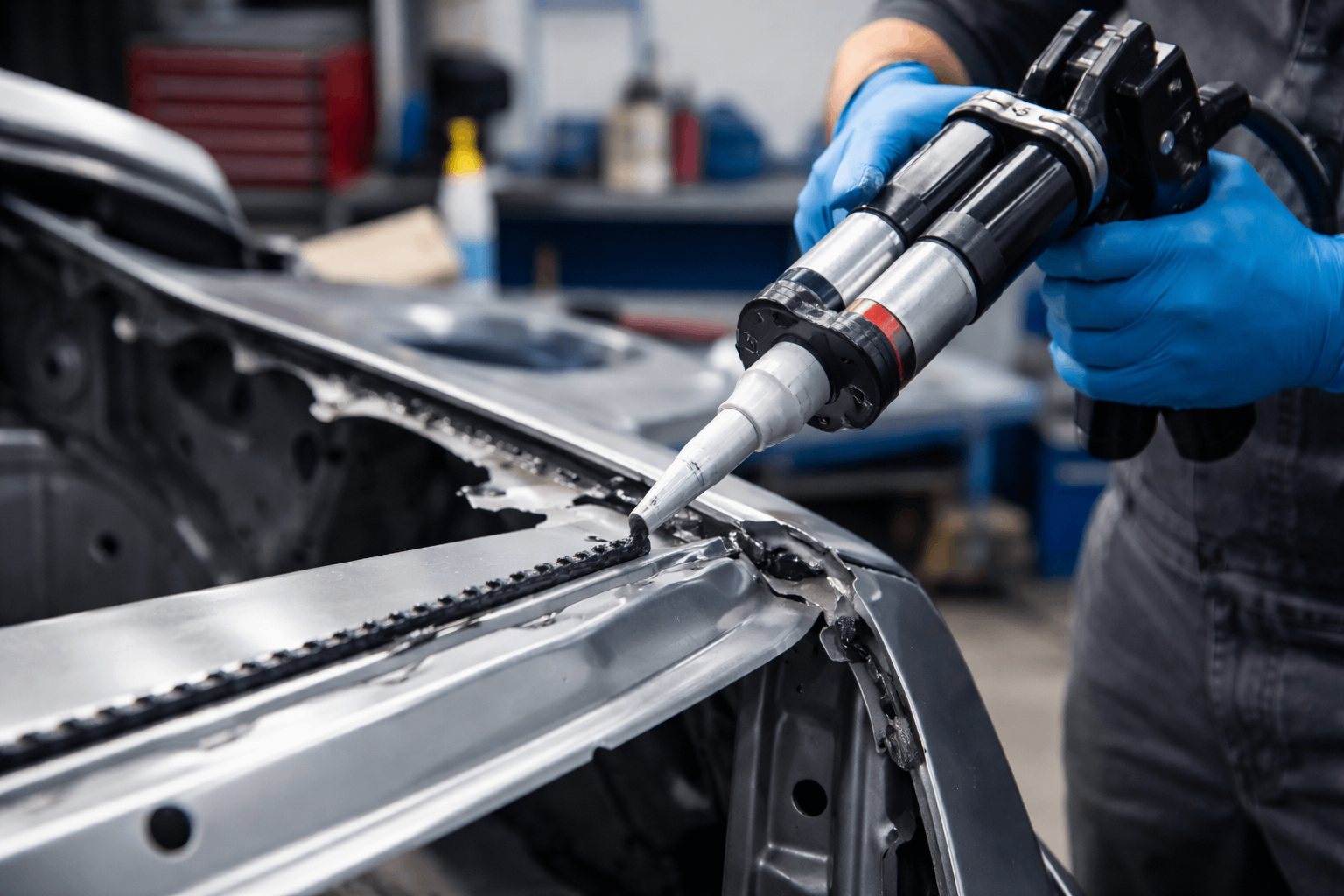
These adhesives are widely used in automotive structural bonding applications, especially in body-in-white (BIW) assembly, where structural integrity is critical.
They provide an alternative to traditional joining methods such as welding, riveting, and bolting—especially when working with mixed-material vehicle structures.
Modern automotive design increasingly relies on combining multiple materials in a single structure. This approach is driven by several factors:
Weight reduction for fuel efficiency
Improved crash performance
Enhanced design flexibility
Cost optimization
However, joining different materials such as aluminum, steel, carbon fiber composites, and engineering plastics presents significant challenges.
This is where automotive structural adhesives for mixed-material joining solutions play a crucial role. They allow manufacturers to bond dissimilar materials without introducing thermal stress or compromising structural integrity.
Traditional joining techniques like welding and mechanical fastening have limitations:
Cannot be used on non-metals like composites or plastics
Generates heat that may distort thin materials
Can damage coatings and reduce corrosion resistance
Add weight to the vehicle
Create stress concentration points
Require drilling holes, weakening the structure
Increase assembly complexity
May loosen over time under vibration
Offer limited compatibility with mixed materials
In contrast, structural adhesives for automotive mixed-material joining offer a more versatile, efficient, and high-performance solution.
One of the biggest advantages of automotive structural adhesives for dissimilar materials is their ability to bond:
Aluminum to steel
Metal to composite
Plastic to metal
Composite to composite
This makes them ideal for multi-material automotive assembly solutions.
By reducing or eliminating mechanical fasteners, adhesives help:
Decrease overall vehicle weight
Improve fuel efficiency
Extend electric vehicle range
This is particularly important for lightweight automotive structural adhesive applications, where every gram matters.
Unlike spot welding or fasteners, adhesives distribute loads evenly across the bonded surface. This results in:
Reduced fatigue failure
Improved structural durability
Enhanced crash performance
Adhesives act as a sealing layer, preventing moisture and contaminants from entering joints. This helps:
Reduce galvanic corrosion (especially in aluminum-steel joints)
Extend vehicle lifespan
Improve reliability
Automotive structural adhesives for NVH reduction help dampen vibrations and reduce noise by:
Filling gaps between components
Absorbing energy
Increasing structural stiffness
Different types of adhesives are used depending on the application and performance requirements.
High strength and durability
Excellent resistance to chemicals and heat
Widely used in automotive epoxy structural bonding
Flexible and impact-resistant
Ideal for flexible automotive bonding applications
Good for vibration-heavy environments
Fast curing
Strong adhesion to metals and plastics
Suitable for high-volume production
Excellent thermal stability
Used in specialized automotive applications
Lower structural strength but high flexibility
In automotive BIW structural bonding, adhesives are used to:
Bond roof panels
Join side panels
Reinforce floor assemblies
Improve torsional stiffness
This enhances overall vehicle safety and rigidity.
With the rise of lightweight vehicles, manufacturers increasingly use aluminum and high-strength steel together.
Automotive structural adhesives for aluminum to steel bonding help:
Prevent galvanic corrosion
Ensure strong, durable joints
Maintain structural integrity
In electric vehicles, adhesives are critical for:
Battery pack sealing
Thermal management
Shock absorption
Automotive structural adhesives for EV battery bonding ensure both safety and performance.
Carbon fiber and fiberglass composites are widely used in performance and electric vehicles.
Automotive structural adhesives for composite bonding:
Prevent material damage
Maintain structural strength
Enable complex geometries
Adhesives are used in:
Door panels
Dashboard assemblies
Trim components
Spoilers and aerodynamic parts
Modern automotive adhesive bonding systems allow:
Automation of application
Reduced assembly steps
Faster production cycles
Adhesives eliminate the need for many mechanical fasteners, leading to:
Simplified assembly
Lower inventory requirements
Reduced manufacturing complexity
Because adhesives are invisible once applied:
No visible fasteners
Cleaner design
Better surface finish
Despite their advantages, several challenges must be addressed:
Proper bonding requires:
Clean, contamination-free surfaces
Surface treatment such as priming or plasma treatment
Some adhesives require:
Heat curing
Extended curing times
Controlled environmental conditions
This can impact production speed if not properly managed.
Ensuring consistent bonding performance requires:
Strict process control
Precise adhesive dispensing
Regular inspection and testing
Not all adhesives work equally well with all materials, making adhesive selection for mixed-material joining critical.
To achieve optimal results, manufacturers should follow these best practices:
Select based on:
Material type
Load requirements
Environmental exposure
Production constraints
Remove oils, dust, and contaminants
Apply primers when necessary
Optimize surface roughness
Maintain consistent bond line thickness
Avoid air entrapment
Use automated dispensing systems when possible
Maintain recommended temperature and humidity
Allow sufficient curing time
Use heat or UV curing if required
As EV adoption increases, demand for high-performance automotive structural adhesives for EV applications will continue to grow.
Future innovations may include:
Self-healing adhesives
Conductive adhesives for electronics
Temperature-responsive bonding materials
The industry is moving toward:
Low-VOC formulations
Recyclable adhesive systems
Eco-friendly manufacturing processes
New developments focus on:
Rapid-curing adhesives
Low-energy curing processes
Improved production efficiency
Automotive structural adhesives for mixed-material joining solutions are transforming the way vehicles are designed and manufactured. By enabling the seamless bonding of metals, composites, and plastics, they provide unmatched flexibility, strength, and efficiency.
From reducing vehicle weight to improving crash performance and enabling electric vehicle innovation, structural adhesives have become an essential technology in modern automotive engineering.
As the industry continues to evolve, the role of automotive structural bonding solutions will only expand, driving advancements in sustainability, performance, and design innovation. Manufacturers that embrace these technologies today will be better positioned to meet the demands of tomorrow’s automotive market.


 Language
 Email
Email WhatsApp