 Home / News / Industry News / Automotive Structural Adhesives for Lightweight Vehicle Construction: Revolutionizing Modern Automotive Engineering
 2026-03-17
In the rapidly evolving automotive industry, manufacturers are under constant pressure to improve fuel efficiency, reduce vehicle weight, and maintain structural integrity and safety. One of the key technologies enabling this shift is automotive structural adhesives, which have become an essential tool in lightweight vehicle construction. By providing strong bonding solutions for metals, composites, and plastics, structural adhesives are transforming the way vehicles are designed, manufactured, and maintained.
Automotive structural adhesives are high-performance bonding agents designed to hold structural components together under mechanical stress, environmental exposure, and vibration. Unlike conventional adhesives used for decorative or non-structural purposes, structural adhesives are engineered to carry loads, distribute stress evenly, and enhance overall vehicle strength. They are used extensively in modern automotive manufacturing, particularly for bonding lightweight materials such as aluminum, magnesium alloys, carbon fiber composites, and high-strength steels.
These adhesives typically fall into several categories, including:
Epoxy adhesives – Known for high strength, durability, and excellent resistance to heat and chemicals. Epoxies are widely used for load-bearing applications and composite bonding.
Polyurethane adhesives – Flexible and impact-resistant, ideal for absorbing vibration and accommodating thermal expansion in multi-material joints.
Acrylic adhesives – Fast-curing and highly versatile, commonly used in body-in-white assembly and joining dissimilar materials.
Hybrid adhesives – Combining properties of multiple chemistries, hybrids provide balanced strength, flexibility, and environmental resistance.
Each type of structural adhesive is selected based on its mechanical properties, thermal tolerance, chemical resistance, and compatibility with different substrates.
Lightweight construction is a major focus in the automotive sector for several reasons:
Fuel Efficiency and Emissions Reduction: Lighter vehicles require less energy to accelerate and maintain speed, directly reducing fuel consumption and carbon dioxide emissions. This is particularly important as governments worldwide enforce stricter fuel economy and emission regulations.
Enhanced Performance: Reducing vehicle mass improves acceleration, braking, handling, and overall vehicle dynamics. Performance-oriented and electric vehicles particularly benefit from lightweight construction.
Electric Vehicle (EV) Range Optimization: For electric vehicles, every kilogram matters. Lightweight materials allow manufacturers to increase battery efficiency and range without compromising safety.
To achieve significant weight reduction, automakers are moving away from traditional steel-intensive construction and adopting multi-material architectures that combine aluminum, high-strength steel, magnesium, and composites. However, joining these materials presents challenges that conventional welding and mechanical fasteners cannot address effectively. This is where automotive structural adhesives excel.
Modern lightweight vehicles often feature a mix of metals and composites. Welding aluminum to steel or bonding carbon fiber to metal is challenging with traditional methods. Structural adhesives provide a reliable solution, allowing manufacturers to join dissimilar materials without weakening the joint or introducing stress concentrations.
Structural adhesives spread loads over a large surface area, reducing the likelihood of stress concentration points that can lead to cracks or joint failure. Unlike mechanical fasteners, which localize stress at points like bolts or rivets, adhesives create uniform bonding that enhances structural durability.
Adhesives also function as vibration dampers. By absorbing mechanical vibrations and reducing rattling, they improve vehicle ride quality and acoustic performance. This is especially valuable for lightweight vehicles, where thinner panels and composite materials can otherwise amplify noise and vibration.
Traditional welding methods can create points of galvanic corrosion when different metals are joined. Structural adhesives act as a barrier, preventing metal-to-metal contact and protecting against corrosion, thereby extending the lifespan of lightweight vehicles.
Structural adhesives allow automotive engineers to explore innovative designs without being constrained by welding accessibility or mechanical fastener placement. Complex geometries, thinner panels, and aerodynamically optimized structures become feasible, supporting both performance and aesthetic goals.
Structural adhesives are used throughout the vehicle, in both visible and hidden components:
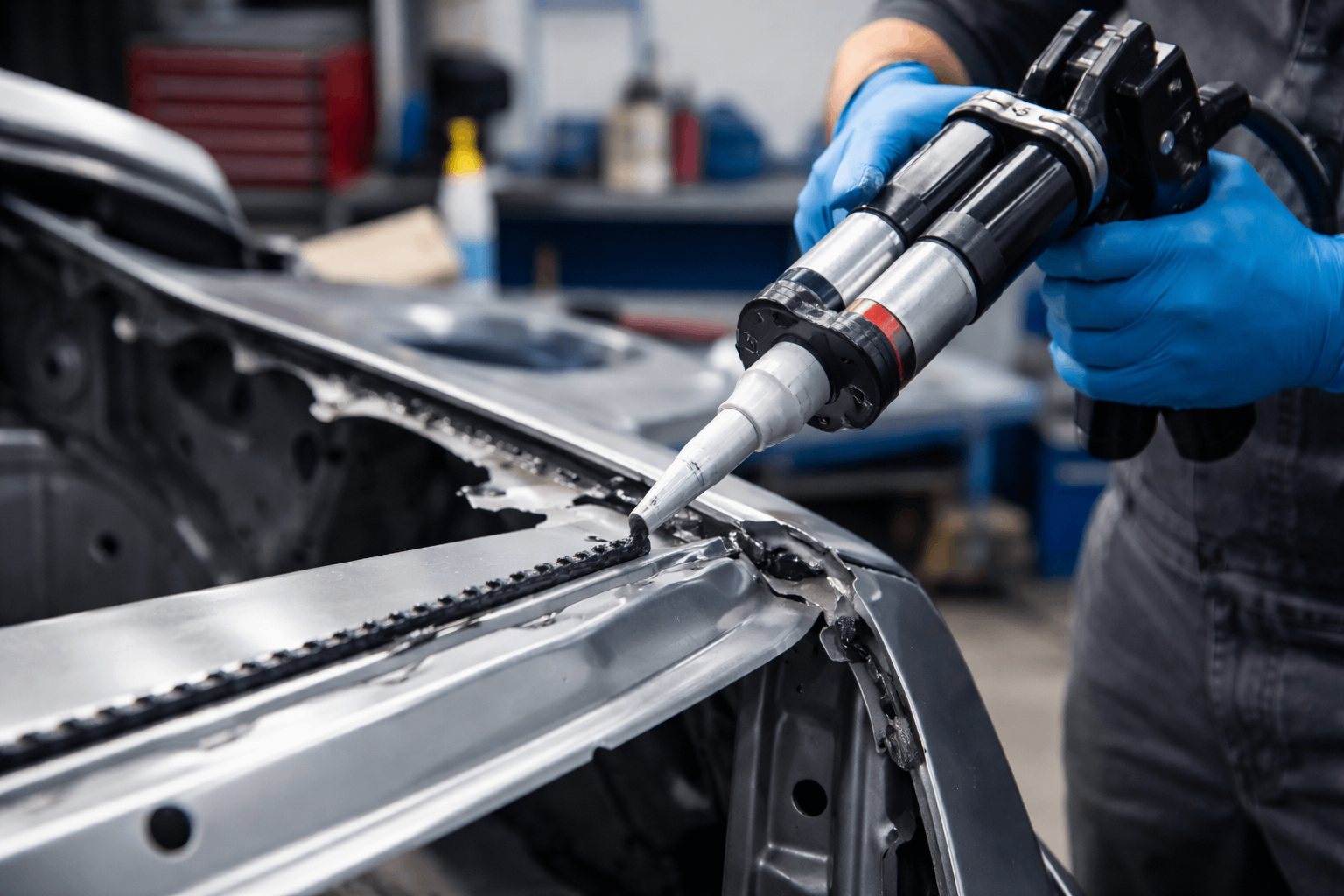
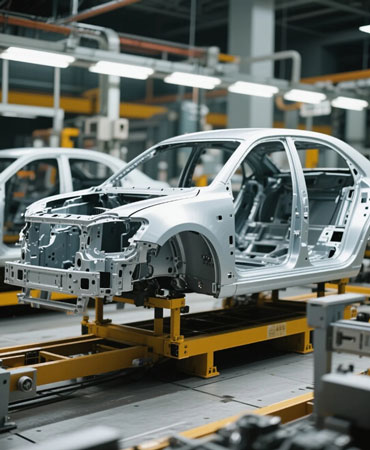
Body-in-White (BIW) Assembly: Adhesives are applied to bond panels, pillars, roof rails, and cross-members, enhancing torsional rigidity while reducing weight.
Door and Hatch Assemblies: High-strength adhesives help join aluminum or composite doors to the frame, maintaining crash safety standards.
Roof Structures: Lightweight composite or aluminum roofs can be securely bonded without welding, maintaining a low center of gravity.
Battery Housing in EVs: Adhesives provide structural integrity for battery enclosures while reducing the risk of vibration-induced damage.
Composite Components: Carbon fiber and glass fiber reinforced plastic (FRP) parts, including bumper beams and side panels, rely on adhesives for strong, seamless integration with metal structures.
While structural adhesives offer significant benefits, their successful application requires careful planning:
Surface Preparation: Proper cleaning, degreasing, and sometimes priming are critical to ensure optimal adhesion. Contaminated surfaces can lead to weak joints.
Curing Conditions: Some adhesives require heat, pressure, or controlled humidity to cure properly. Inconsistent curing can compromise bond strength.
Environmental Resistance: Lightweight vehicles are exposed to varying temperatures, moisture, and chemicals. Selecting adhesives that maintain performance under these conditions is essential.
Inspection and Quality Control: Unlike welds or bolts, adhesive bonds are not always visible. Non-destructive testing methods, such as ultrasonic inspection, are often employed to verify joint integrity.
Cost Considerations: High-performance structural adhesives can be more expensive than traditional joining methods. However, the long-term benefits in weight reduction, performance, and durability often justify the investment.
Several leading automakers have embraced structural adhesives in their lightweight vehicle strategies:
Electric Vehicles (EVs): Battery packs are often housed in aluminum or composite enclosures bonded with high-strength epoxy adhesives. This ensures both rigidity and impact protection while keeping weight minimal.
Luxury and Sports Cars: Manufacturers use carbon fiber panels bonded with structural adhesives to reduce body weight and improve acceleration and handling.
Aluminum-Intensive Vehicles: Vehicles with aluminum bodies rely on adhesives to join aluminum to steel or composites, avoiding galvanic corrosion and preserving structural integrity.
The role of structural adhesives in lightweight vehicle construction is poised to expand as material science and adhesive technology advance:
High-Temperature and UV-Resistant Adhesives: New formulations will allow adhesives to withstand extreme conditions without degradation.
Faster-Curing Adhesives: Reducing curing times will improve production line efficiency and reduce manufacturing costs.
Integration with Smart Materials: Adhesives with embedded sensors could monitor stress, temperature, or fatigue in real-time, enhancing predictive maintenance capabilities.
Sustainable Adhesives: Biodegradable or low-VOC adhesives will support eco-friendly vehicle production, aligning with global sustainability initiatives.
Automation in Application: Robotic systems are increasingly used to apply adhesives precisely, ensuring consistency and reducing human error.
Automotive structural adhesives are transforming lightweight vehicle construction by enabling multi-material bonding, improving structural performance, and supporting innovative designs. As the automotive industry continues to prioritize weight reduction, fuel efficiency, and electric vehicle range, the adoption of high-performance adhesives will only grow. By addressing challenges such as surface preparation, curing conditions, and quality control, manufacturers can fully leverage the benefits of structural adhesives, creating vehicles that are lighter, safer, more efficient, and more durable.
For automotive engineers and manufacturers, understanding and utilizing structural adhesives is no longer optional—it is a strategic necessity for building the vehicles of tomorrow. The combination of lightweight materials and advanced adhesives represents the future of sustainable, high-performance automotive engineering.



 Language
 Email
Email WhatsApp