 Home / News / Industry News / Low-VOC Automotive Body Adhesive for Sustainable Manufacturing
 2025-12-23
In today's automotive industry, sustainability isn't just a buzzword — it's a strategic imperative. Manufacturers around the world are under mounting pressure to reduce their environmental footprint while maintaining performance, safety, and cost-effectiveness. One often overlooked but critically important area of sustainable innovation is automotive body adhesive technology — specifically, the adoption of Low-VOC automotive body adhesives that support eco-friendly manufacturing processes without compromising structural integrity.
This article explores the role of low-VOC automotive body adhesives in sustainable manufacturing, why they matter, how they work, and how they're reshaping automotive production for a greener future.
VOC stands for Volatile Organic Compound. These are carbon-based chemicals that easily evaporate at room temperature and are common in many adhesives, paints, coatings, and solvents. In automotive manufacturing, traditional adhesives often contain high levels of VOCs that can:
Evaporate into the air during application and curing
Contribute to air pollution
Cause health and safety concerns for workers
Impact indoor air quality in manufacturing facilities
From a regulatory standpoint, governments around the world are tightening VOC emissions standards as part of broader efforts to combat air pollution and climate change.
High-VOC adhesives have long been used in automotive body assembly due to their strong bonding capabilities. However, they present several challenges:
Environmental emissions: VOCs contribute to smog formation and greenhouse gas emissions.
Worker health risks: Prolonged exposure can lead to respiratory irritation, headaches, and long-term health impacts.
Regulatory compliance: Manufacturers must invest in VOC capture and abatement systems to meet environmental regulations, increasing operational costs.
This has sparked a transition toward Low-VOC automotive body adhesives — formulations that maintain performance while reducing harmful emissions.
A Low-VOC automotive body adhesive is a high-performance bonding agent engineered to have significantly reduced levels of volatile organic compounds compared with traditional adhesives. These products are formulated to deliver:
Excellent structural bonding
Durability and long-term performance
Lower environmental impact
Better workplace safety
In essence, low-VOC adhesives support both manufacturing performance and sustainability goals.
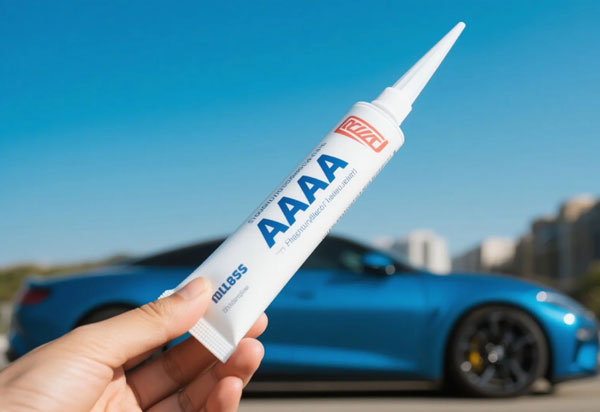
Reducing VOC emissions is a major step toward more sustainable manufacturing. Low-VOC adhesives emit fewer harmful compounds during application and curing, contributing to:
Cleaner air quality
Reduced greenhouse gas emissions
Lower environmental regulatory risk
This is critical as global regulations tighten — including rules from bodies like the EPA (Environmental Protection Agency) in the U.S. and similar agencies in the EU and Asia.
Traditional adhesives can release fumes that are unpleasant or harmful, requiring extensive ventilation and protective gear. Low-VOC alternatives help:
Reduce worker exposure to toxic vapors
Improve comfort and safety on the factory floor
Lower the need for costly protective systems
This not only helps protect employee health but also contributes to higher productivity and lower absenteeism.
Compliance with VOC emission standards is mandatory in many regions. Low-VOC adhesives help manufacturers meet:
Air quality standards
Workplace exposure limits
Environmental discharge regulations
By reducing VOC emissions at the source, companies can save on:
Air filtration and capture equipment
Regulatory reporting and compliance costs
Penalties and fines for non-compliance
Sustainable manufacturing is increasingly important to consumers and corporate stakeholders. Brands that adopt low-VOC adhesives can:
Strengthen their environmental branding
Appeal to eco-conscious buyers
Support ESG (Environmental, Social, Governance) reporting goals
For automotive OEMs (Original Equipment Manufacturers) and suppliers, sustainability leadership is becoming a competitive advantage.
One of the key concerns when adopting low-VOC technology is whether it can meet the demanding performance requirements of automotive body assembly. Fortunately, modern low-VOC automotive body adhesives can deliver:
Whether bonding steel, aluminum, composites, or mixed substrates, low-VOC adhesives are engineered to provide:
High tensile and shear strength
Resistance to dynamic loads
Durability in harsh environments
This is critical for structural applications like body panels, frame joints, and load-bearing components.
Automotive components must endure:
Temperature extremes
Moisture and corrosion
Vibration and mechanical stress
State-of-the-art low-VOC adhesives are formulated to resist these stresses, maintaining performance over the vehicle's lifetime.
Because they emit fewer VOCs and less odor, these adhesives play well with:
Waterborne paints
Powder coatings
Advanced surface treatments
This minimizes the risk of coating failures or finish imperfections post-bonding.
Low-VOC automotive body adhesives are used across numerous applications in vehicle manufacturing and repair:
Adhesives are used to join:
Exterior body panels
Roof and pillar assemblies
Hood and trunk lids
Replacing or supplementing spot welding with adhesive bonding can improve design flexibility and structural performance.
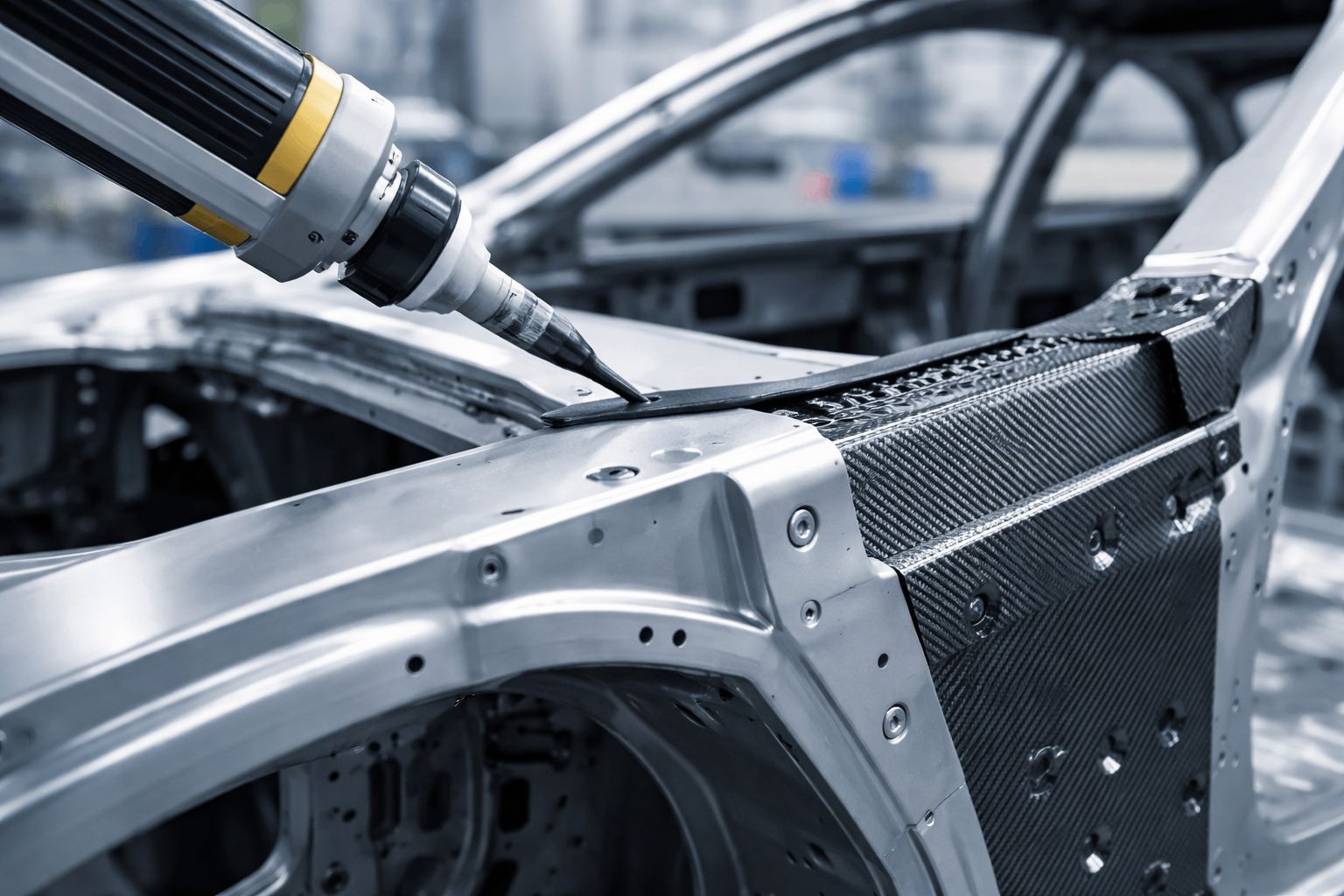
In many modern vehicles, especially lightweight or electric vehicles (EVs), adhesives are vital for:
Joining mixed materials (e.g., aluminum to carbon fiber)
Reinforcing load-bearing areas
Reducing overall vehicle weight
Low-VOC adhesives support stronger, lighter, and more efficient vehicle structures.
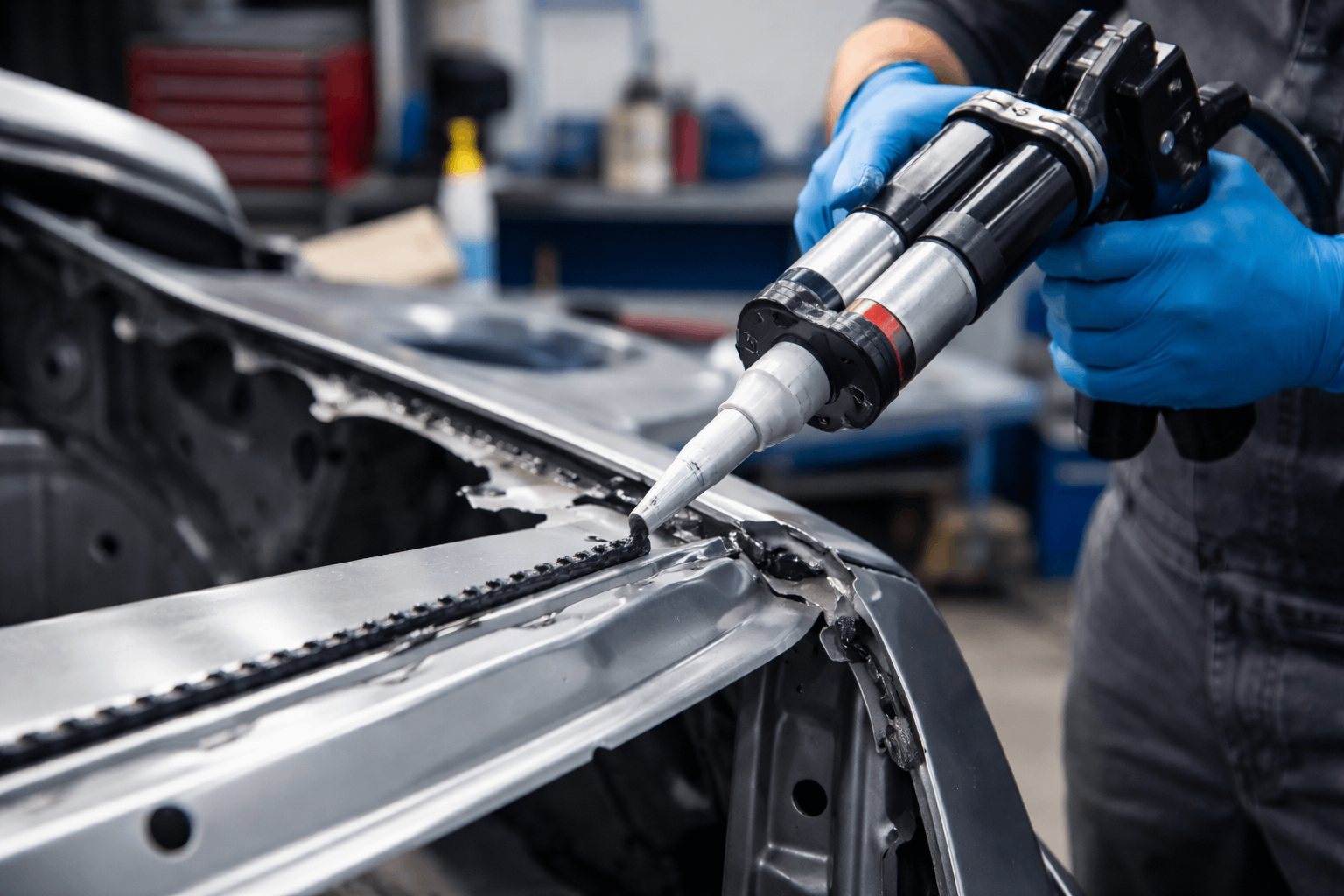
Collision repair facilities increasingly use low-VOC adhesives because they:
Meet environmental and health standards
Reduce odor during repair operations
Are compatible with modern paints and coatings
This expands their value beyond manufacturing into service and maintenance.
OEMs and adhesive suppliers work closely to:
Analyze performance requirements
Develop low-VOC formulations that meet specifications
Conduct rigorous testing under real-world conditions
This process ensures that sustainability does not come at the expense of safety or performance.
Low-VOC adhesives must integrate with existing production lines:
Automated dispensing systems
Controlled curing environments
Quality inspection tools
This supports efficient, repeatable, and high-quality assembly results.
Manufacturers train workers on:
Proper handling techniques
Equipment use
Health and safety best practices
Even though low-VOC products are safer, proper handling ensures optimal results and workplace wellbeing.
Some early low-VOC formulations struggled to match traditional adhesives in high-stress applications. However, ongoing R&D is closing this gap, enabling stronger, greener options.
Low-VOC technologies can have higher upfront costs, but when evaluated through the lens of:
Regulatory compliance
Worker health
Environmental impact
Long-term performance
They often deliver superior total value.
The future of low-VOC automotive body adhesives depends on:
Cross-industry collaboration
Advanced polymer science
Smart manufacturing integration
These will continue driving performance improvements and cost efficiencies.
Low-VOC automotive body adhesives represent a key enabling technology for sustainable automotive manufacturing. By reducing harmful emissions, improving worker safety, and maintaining high performance standards, these advanced adhesive solutions help manufacturers meet regulatory demands and achieve environmental goals.
As automotive OEMs and suppliers embrace sustainable practices, low-VOC adhesives are becoming a strategic asset — not just an environmental compliance tool, but a competitive differentiator in a rapidly evolving industry.
Whether you're an OEM evaluating new bonding strategies, a supplier looking to optimize your product portfolio, or an aftermarket professional seeking safer solutions, understanding and adopting low-VOC automotive body adhesives is essential for a greener, safer, and more efficient automotive future.



 Language
 Email
Email WhatsApp