 Home / News / Industry News / Automotive Shock Absorption Adhesive in Vehicle Safety Engineering: Enhancing Crash Performance and Structural Integrity
 2026-04-14
In modern automotive engineering, safety is no longer defined only by airbags, seatbelts, or crumple zones. Advanced material science has become a critical part of crash safety design. Among these materials, automotive shock absorption adhesive plays an increasingly important role in improving structural integrity and energy management during collisions.
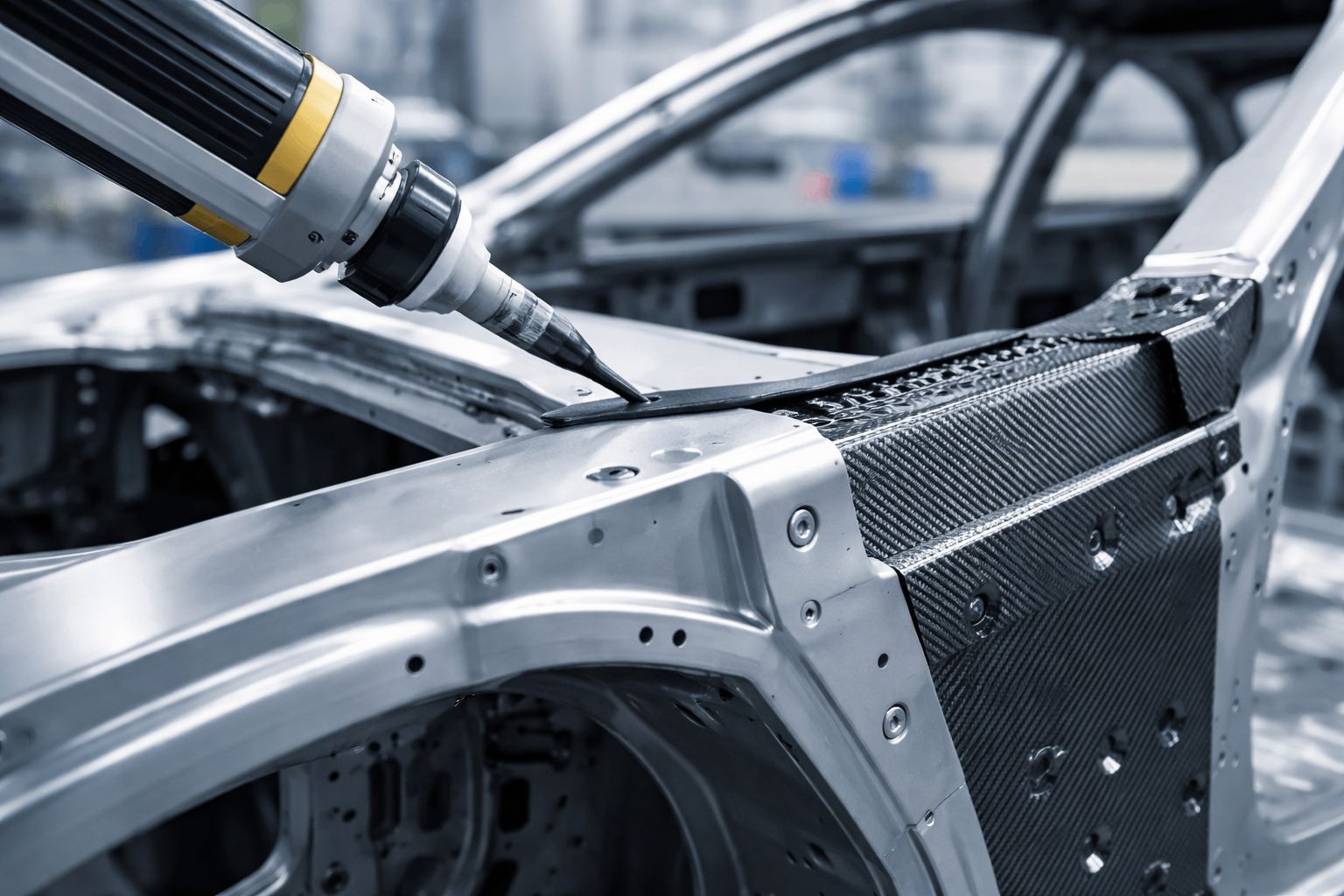
Unlike conventional fasteners such as welding spots or mechanical bolts, shock absorption adhesives provide a unique combination of bonding strength and energy dissipation. This allows vehicle structures to remain rigid when needed, yet absorb and distribute impact energy during accidents.
This article focuses on how automotive shock absorption adhesive contributes specifically to vehicle crash performance, structural reinforcement, safety engineering design, and future crash-resistant technologies.
Traditional automotive safety systems rely heavily on mechanical design. However, as vehicles become lighter and more complex, engineers require materials that can perform multiple functions simultaneously.
Automotive shock absorption adhesive provides:
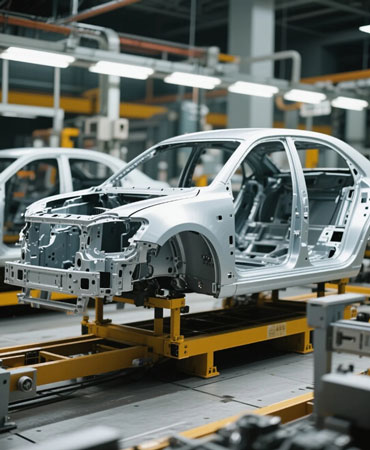
This makes adhesives an essential part of modern Body-in-White (BIW) engineering.
When a vehicle collides, a large amount of kinetic energy must be controlled and redirected. Shock absorption adhesives help manage this energy in three stages:
The adhesive layer begins to deform under sudden stress, preventing immediate structural separation.
The viscoelastic nature of the adhesive converts mechanical energy into heat through internal molecular friction.
Stress is spread across a wider surface area, reducing localized failure points.
This mechanism significantly enhances crashworthiness.

Welding and bolts provide high rigidity but lack flexibility. During impact:
Shock absorption adhesives solve these issues by:
This leads to more predictable crash behavior.
Adhesives are used in:
They help absorb frontal impact energy before it reaches the cabin.
Side doors and pillars use adhesives to:
Roof structures rely on adhesives to:
Rear crumple zones use adhesives to:
Crash-focused shock absorption adhesives often include:
Modified with rubber particles to increase flexibility.
Provide elasticity and high elongation at break.
Combine rigidity and damping performance.
Improve crack resistance and energy dispersion.
To ensure crash performance, adhesives undergo strict validation:
Vehicle structures are tested under controlled impact conditions.
Measures joint integrity under extreme force.
Simulates sudden collision forces.
Evaluates long-term durability under repeated stress cycles.
Reduces intrusion into passenger cabin.
Eliminates weak points in joints.
Extends crash duration, reducing peak force.
Allows steel, aluminum, and composites to work together safely.
Electric vehicles require special crash protection because of:
Shock absorption adhesives:
Too rigid reduces damping; too soft reduces strength.
Performance must remain stable across extreme climates.
Incorrect application can lead to safety risks.
Materials that change stiffness under impact.
Machine learning used to design molecular structures.
Adhesives enabling ultra-light yet strong vehicle frames.
Repair micro-damage after minor impacts.
Automotive shock absorption adhesive has become a cornerstone of modern vehicle crash safety engineering. It enhances structural integrity, improves energy absorption, and allows advanced lightweight design strategies.
As vehicles evolve toward electric, autonomous, and intelligent systems, crash safety adhesives will continue to play a critical role in protecting passengers and improving overall structural performance.



 Language
 Email
Email WhatsApp