 Home / News / Industry News / Automotive Structural Adhesives in EV Battery Pack Assembly
 2026-04-14
The rapid growth of electric vehicles (EVs) has fundamentally transformed automotive engineering, especially in the design and manufacturing of battery systems. Among the most important enabling technologies in this shift are automotive structural adhesives, which are now widely used in EV battery pack assembly to replace or complement traditional joining methods such as welding, riveting, and mechanical fastening.
EV battery packs are complex electrochemical systems that must deliver high energy density, structural integrity, crash safety, thermal stability, and long service life. To achieve these demanding requirements, manufacturers increasingly rely on structural adhesives as a multifunctional solution that not only bonds components but also enhances overall pack performance.
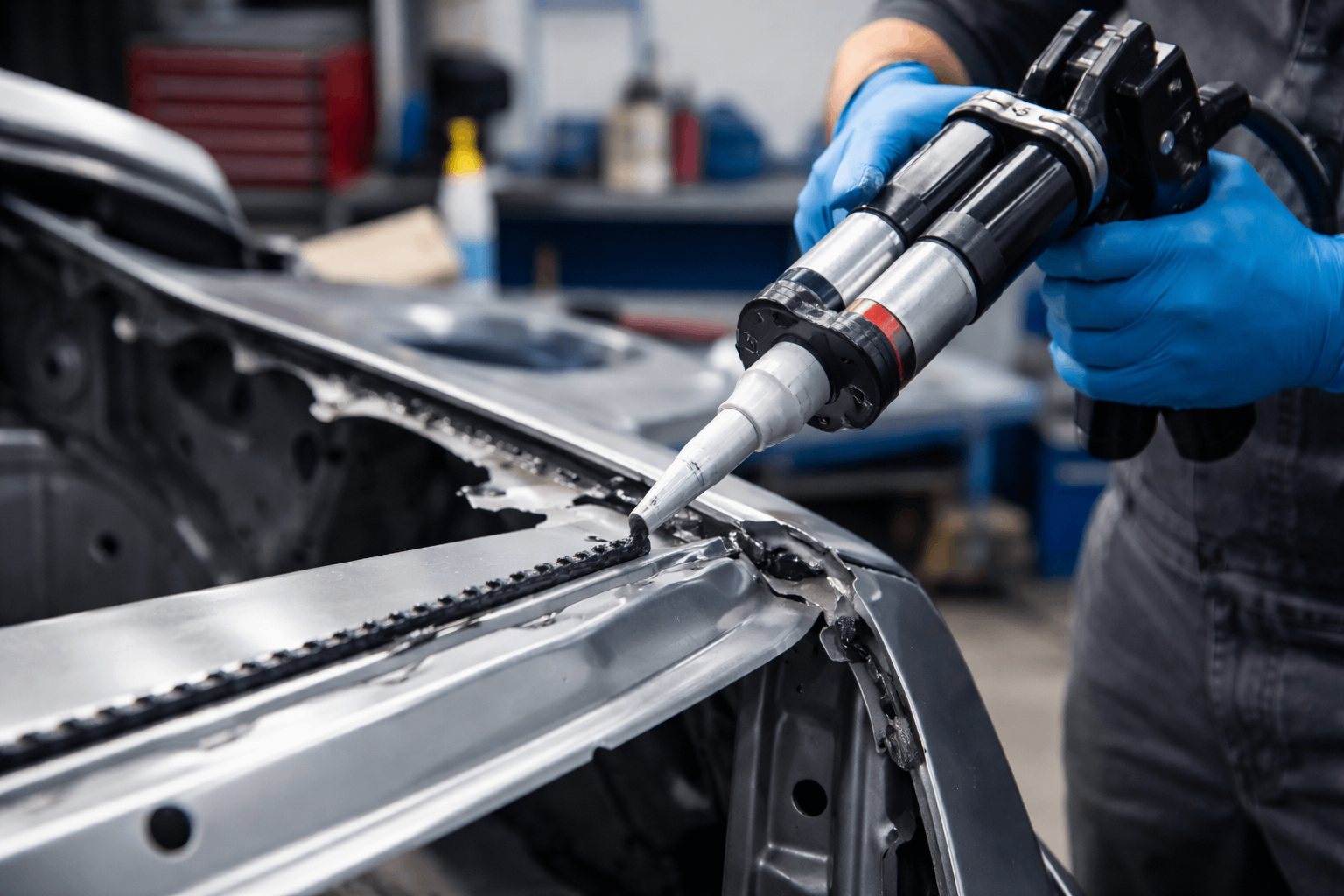
Automotive structural adhesives are high-performance bonding materials—typically epoxies, polyurethanes, or acrylic-based systems—designed to join load-bearing components in vehicles.
In EV battery pack assembly, these adhesives are used to bond:
Battery cells to modules
Modules to trays or housings
Cooling plates to structural frames
Battery lids and enclosure covers
Dissimilar materials (aluminum, steel, composites, plastics)
Unlike conventional fasteners, structural adhesives distribute loads across the entire bonded surface, rather than concentrating stress at discrete points.

These adhesives are engineered to withstand:
High mechanical loads
Thermal cycling and extreme temperatures
Vibration and shock
Moisture, chemicals, and corrosion environments
EV battery packs are not only energy storage systems but also structural and safety-critical components. In modern EV platforms, the battery pack often acts as part of the vehicle’s chassis, contributing to stiffness and crash performance.
Structural adhesives are essential because they enable:
Traditional mechanical fasteners add weight and require reinforced mounting points. Adhesives eliminate many of these needs, helping reduce overall vehicle mass. Lower weight directly improves EV driving range and energy efficiency.
EV battery packs use a combination of materials such as aluminum alloys, high-strength steel, plastics, and composites. Welding is often unsuitable for these combinations, while structural adhesives enable reliable bonding between dissimilar substrates without thermal distortion.
During a collision, EV battery packs must remain intact to prevent thermal runaway and electrical hazards. Structural adhesives enhance crash durability by:
Distributing impact forces evenly
Increasing structural stiffness
Absorbing energy through toughened polymer systems
Studies and industrial applications show that crash-toughened epoxies and polyurethanes significantly improve battery pack integrity under impact conditions.
Structural adhesives are used to bond individual battery cells into modules. This improves mechanical stability and reduces micro-movements caused by vibration, which could otherwise degrade cell performance over time.
In addition, adhesives act as:
Shock absorbers
Electrical insulators
Thermal interface enhancers (in some formulations)
Battery modules are bonded into trays or pack housings using high-strength adhesives. This ensures:
Strong structural integration
Reduced reliance on bolts and rivets
Better vibration resistance
Battery enclosures must be airtight and watertight to protect sensitive electronics and cells. Structural adhesives also function as sealing agents, preventing:
Moisture ingress
Dust contamination
Road salt corrosion
Modern EV battery packs often use adhesive sealing instead of traditional gaskets in certain areas for improved reliability.
Thermal management is critical in EV battery performance. Structural adhesives help bond cooling plates and thermal management components directly to the battery structure.
This ensures:
Efficient heat transfer
Reduced thermal resistance
Stable temperature distribution across cells
Increasingly, battery packs are designed as load-bearing structures. Adhesives reinforce the battery tray and enclosure, increasing stiffness and improving torsional rigidity of the entire vehicle chassis.
Welding introduces heat-affected zones that can weaken materials or damage coatings. Adhesives eliminate this issue entirely, enabling safer joining of sensitive battery components.
Mechanical fasteners create localized stress points that can lead to fatigue failure. Adhesives distribute stress evenly across the bonded area, improving long-term durability.
Because adhesives seal the joint interface, they prevent exposure to oxygen and moisture, significantly reducing corrosion risk in battery pack structures.
Engineers can design more complex and optimized battery pack geometries without being constrained by fastener placement or welding accessibility.
Modern structural adhesives are formulated for fast curing and automation compatibility. Some systems offer:
Controlled open time for assembly
Rapid curing via heat or induction
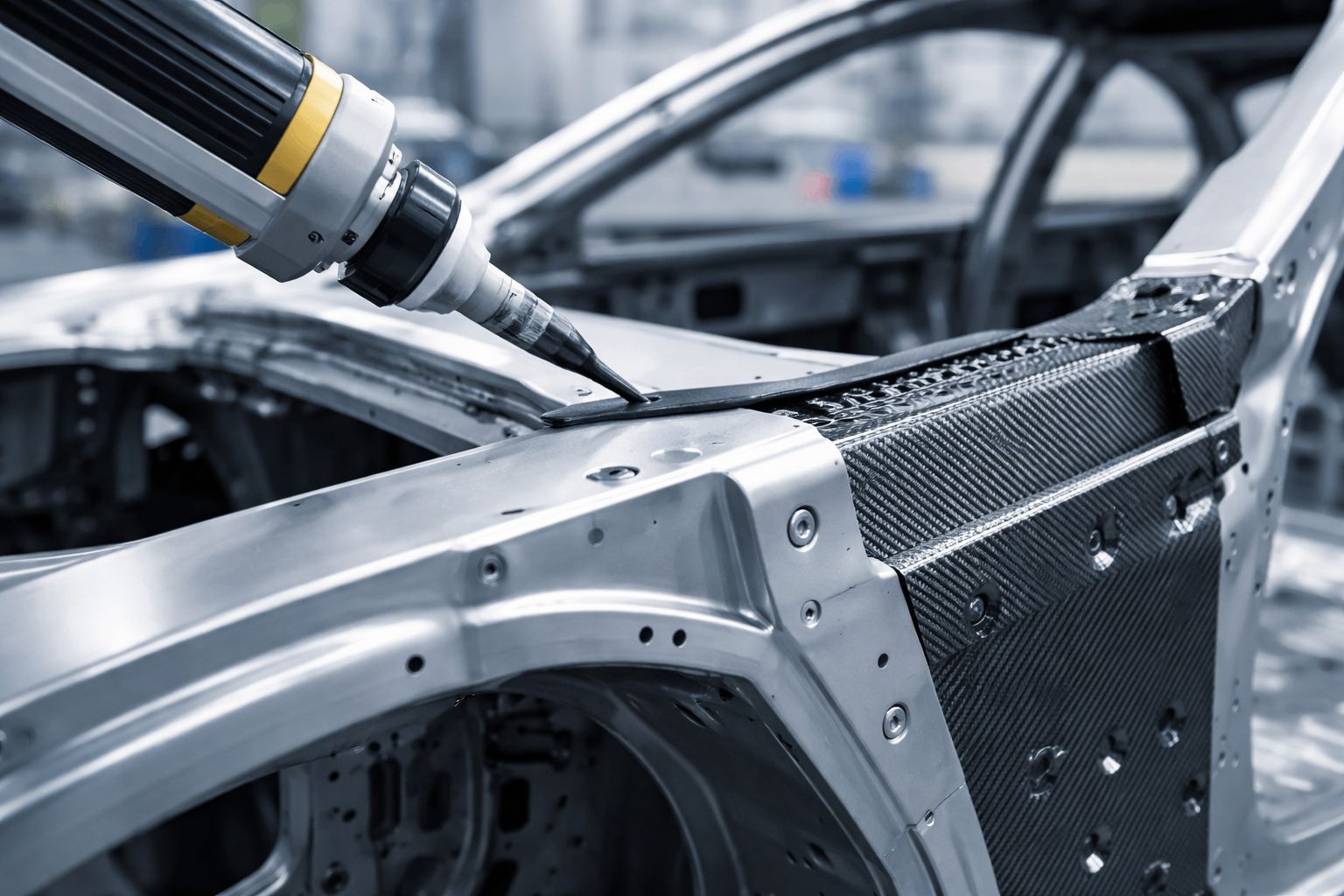
Compatibility with robotic dispensing systems
This improves production efficiency in high-volume EV manufacturing lines.
Epoxies are widely used due to their:
High strength
Excellent chemical resistance
Strong adhesion to metals
They are commonly used in crash-critical bonding and structural reinforcement applications.
Polyurethanes offer greater flexibility and impact resistance. They are ideal for:
Vibration damping
Thermal expansion compensation
Mixed-material bonding
Acrylic systems provide:
Fast curing
Good environmental resistance
Strong adhesion to multiple substrates
They are often used in high-speed manufacturing environments.
Despite their advantages, structural adhesives also present engineering challenges:
Unlike mechanical fasteners, adhesives require curing time to achieve full strength. This must be integrated into production scheduling.
Strong adhesive bonding requires careful surface preparation, including:
Cleaning and degreasing
Surface abrasion or activation
Use of primers for certain substrates
Once cured, structural adhesives can be difficult to remove. This creates challenges for:
Battery repair
Recycling and disassembly
Component replacement
Adhesive bonding requires strict process control to ensure consistent performance, including:
Mixing ratio accuracy
Application thickness control
Environmental condition monitoring
The role of structural adhesives in EV battery packs continues to evolve rapidly. Key future trends include:
Next-generation adhesives are being developed to provide multiple functions simultaneously, such as:
Structural bonding
Thermal conductivity
Electrical insulation
Flame retardancy
Manufacturers are increasingly focusing on adhesives with ultra-fast curing capabilities to support mass EV production.
To support circular economy goals, new adhesives are being designed to allow:
Easier disassembly
Recycling-friendly bonding
Reduced material waste
Automation, robotics, and AI-driven quality monitoring are being integrated into adhesive application systems for higher precision and consistency.
Automotive structural adhesives have become a cornerstone technology in modern EV battery pack assembly. They enable lightweight design, improved crash safety, enhanced thermal management, and efficient manufacturing processes that traditional joining methods cannot fully achieve.
As EV adoption continues to accelerate globally, structural adhesives will play an even more critical role in advancing battery pack safety, performance, and sustainability. Their evolution from simple bonding agents to multifunctional engineering materials marks a major milestone in automotive innovation.
In the future, the combination of advanced adhesive chemistry and intelligent manufacturing will further redefine how EV battery systems are designed and built—making vehicles safer, lighter, and more efficient than ever before.


 Language
 Email
Email WhatsApp