 Home / News / Industry News / How to Choose the Right Automotive Structural Adhesives
 2026-04-07
Automotive manufacturing has undergone a major transformation over the past two decades. As vehicles become lighter, safer, and more fuel-efficient, traditional joining methods such as welding and mechanical fastening are increasingly being supplemented or replaced by advanced bonding technologies. Among these, automotive structural adhesives play a critical role in modern vehicle engineering.
Choosing the right automotive structural adhesives is not simply a matter of selecting a strong glue. It involves understanding material compatibility, performance requirements, environmental conditions, production processes, and long-term durability expectations. A wrong choice can lead to bonding failure, safety risks, and costly recalls, while the right adhesive can significantly enhance vehicle performance, crash resistance, and structural integrity.
This article provides a comprehensive guide on how to choose the right automotive structural adhesives for different applications in vehicle manufacturing.
Automotive structural adhesives are high-performance bonding materials designed to join load-bearing components in vehicles. Unlike conventional adhesives used for interior trims or non-structural parts, structural adhesives are engineered to withstand high stress, vibration, temperature changes, and environmental exposure.
These adhesives are commonly used in:
Body-in-White (BIW) assembly
Door panels and roof structures
Chassis reinforcement
Battery pack assembly in electric vehicles (EVs)
Aluminum and multi-material bonding
They are typically based on epoxy, polyurethane, acrylic, or hybrid chemistries, each offering different performance characteristics.
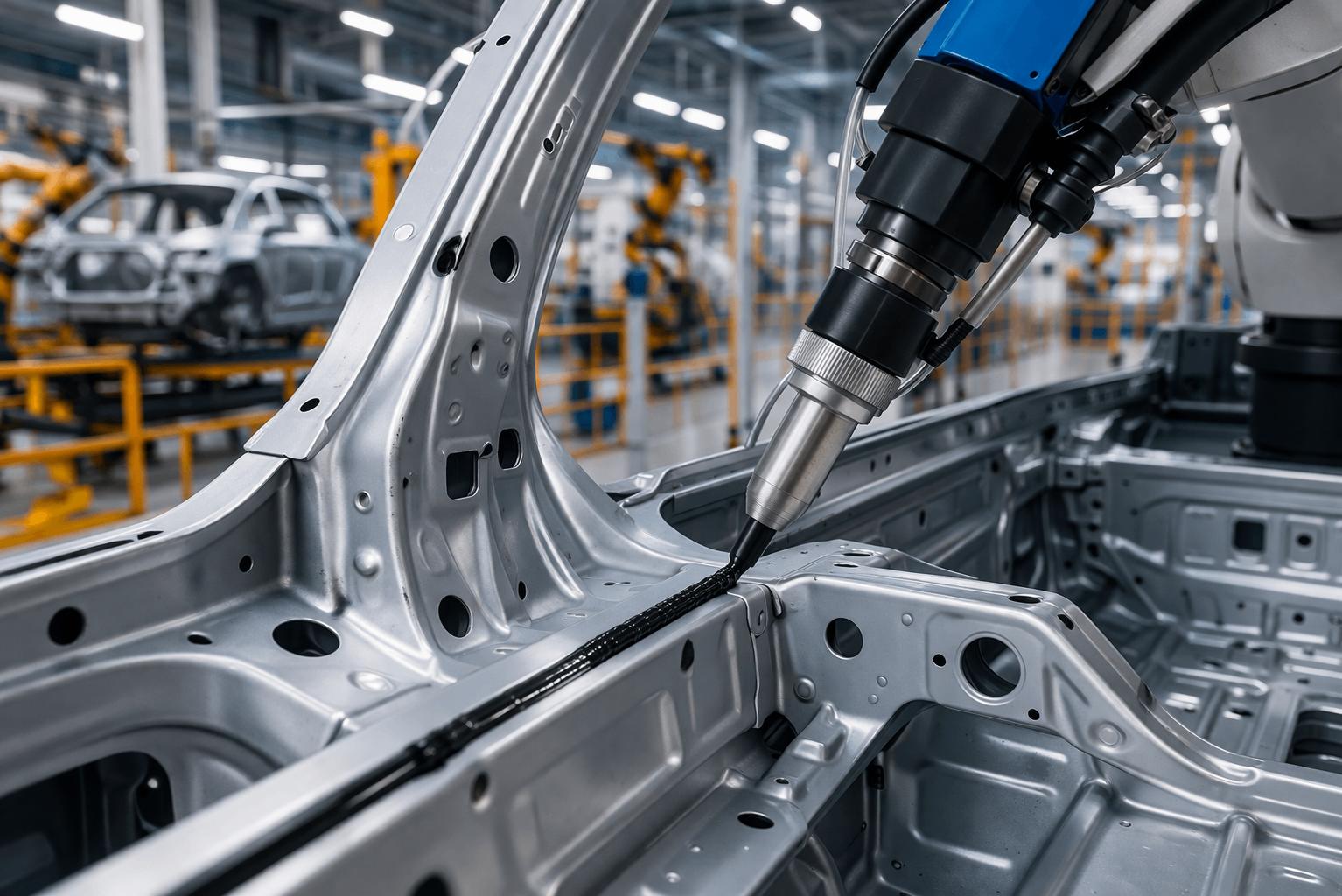
Before selecting the right product, it is important to understand why structural adhesives are essential in modern automotive engineering:
Automakers are under constant pressure to reduce vehicle weight to improve fuel efficiency and extend EV battery range. Structural adhesives enable the use of lightweight materials such as aluminum, composites, and high-strength steel without compromising strength.
Adhesives distribute stress more evenly across bonded surfaces, improving energy absorption during collisions. This helps enhance passenger safety.
Unlike welding, adhesives create a sealed joint that reduces exposure to moisture and air, minimizing corrosion risks.
Structural adhesives allow engineers to join dissimilar materials, enabling innovative vehicle designs that were previously difficult or impossible.
Selecting the right adhesive requires evaluating several critical parameters.
One of the most important factors is the compatibility between the adhesive and the substrates being bonded.
Modern vehicles use a combination of materials such as:
High-strength steel
Aluminum alloys
Carbon fiber composites
Magnesium components
Plastics and thermoplastics
Not all adhesives bond equally well with all materials. For example:
Epoxy adhesives perform exceptionally well on metals and composites
Polyurethane adhesives offer flexibility and good adhesion to plastics
Acrylic adhesives provide fast curing and good multi-material bonding
Understanding substrate types is the first step in narrowing down adhesive options.
Different vehicle components require different levels of strength and flexibility. Key performance parameters include:
Tensile strength
Shear strength
Peel strength
Impact resistance
For structural areas such as BIW joints, high shear strength and fatigue resistance are essential. For areas exposed to vibration, a balance between rigidity and flexibility is required.
Automotive adhesives must withstand a wide range of temperatures, including:
Extreme cold in winter conditions
High heat in engine compartments
Thermal cycling during operation
Some structural adhesives can perform reliably from -40°C to over 150°C, making them suitable for demanding environments.
In automotive manufacturing, production speed is critical. Adhesives must align with assembly line requirements.
There are generally three curing types:
Room temperature curing
Heat-accelerated curing
Fast-curing systems for high-speed production lines
Fast curing adhesives improve productivity but may require specialized equipment or controlled conditions.
Vehicles are expected to last for many years under harsh conditions. Therefore, adhesives must resist:
UV exposure
Moisture and humidity
Road salt and chemicals
Long-term mechanical fatigue
High-quality structural adhesives maintain performance over the entire vehicle lifecycle, often exceeding 10–15 years.
Vehicles are constantly exposed to vibrations from road conditions and engine operation. Adhesives must maintain bond integrity under repeated stress cycles.
This is particularly important for:
Chassis connections
Door assemblies
EV battery packs
Flexible adhesives or toughened epoxies are often used in these applications.
Automotive manufacturers must comply with strict environmental regulations. Adhesives should meet standards such as:
Low VOC (Volatile Organic Compounds) emissions
REACH compliance in Europe
OEM-specific environmental requirements
Sustainability is also becoming a key factor, with increasing demand for eco-friendly adhesive formulations.
Adhesives must fit seamlessly into the manufacturing process. Considerations include:
Manual vs automated application
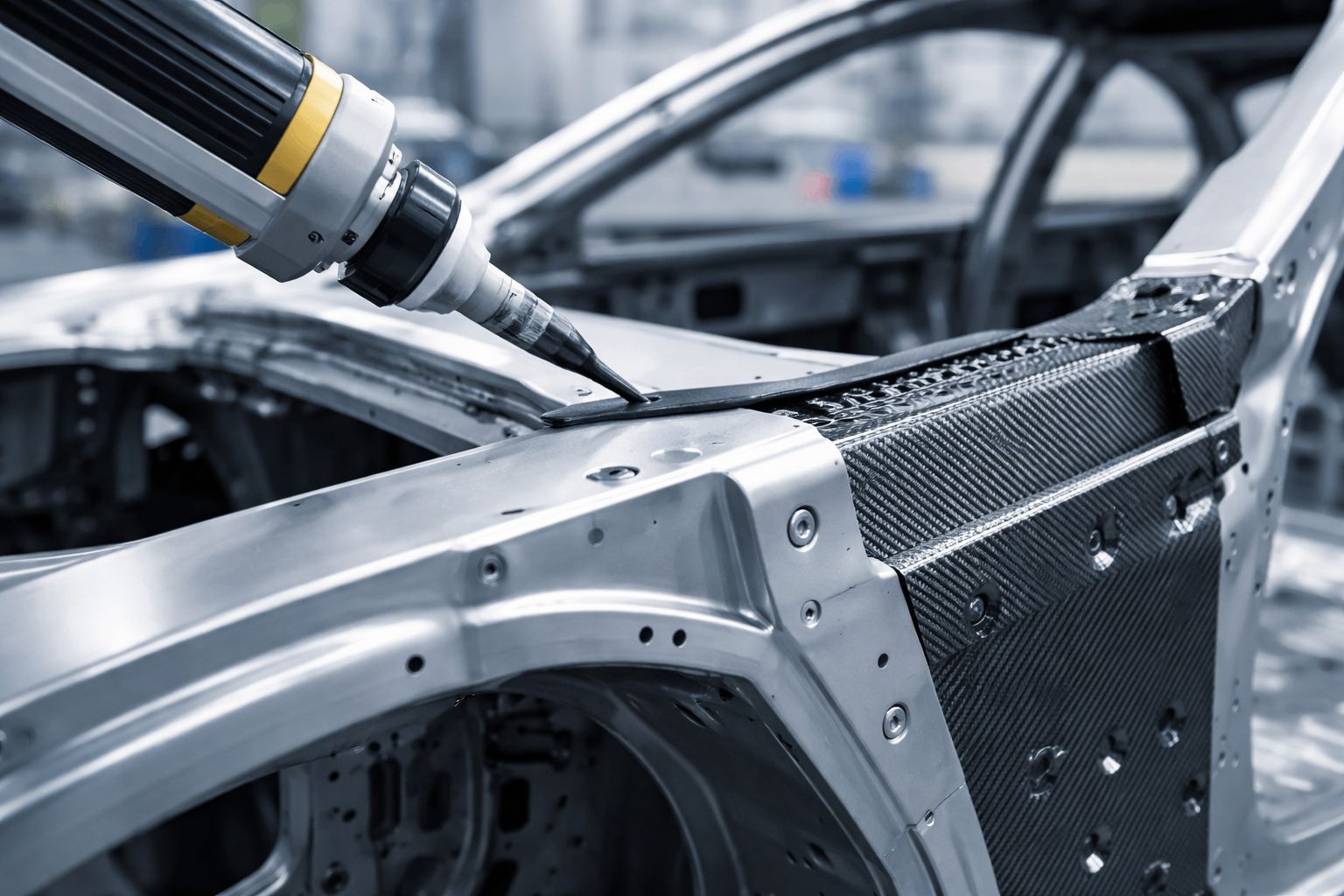
Compatibility with robotic dispensing systems
Pot life and working time
Storage conditions and shelf life
For large-scale production, automation compatibility is often a decisive factor.
Understanding adhesive types helps in making better selection decisions.
High strength and durability
Excellent chemical resistance
Common in BIW and structural joints
Flexible and impact-resistant
Good for vibration-heavy applications
Often used in mixed material bonding
Fast curing
Good adhesion to various substrates
Suitable for high-speed production lines
Combine properties of multiple chemistries
Balanced performance characteristics
Increasingly used in EV applications
Electric vehicles introduce new challenges and requirements for adhesives. Key applications include:
Battery pack assembly and sealing
Lightweight aluminum chassis bonding
Thermal management systems
Composite material integration
In EVs, adhesives must provide not only structural strength but also electrical insulation and thermal stability.
Many manufacturers encounter issues due to improper selection:
Using one adhesive for all materials can lead to weak bonding or failure.
Adhesives that perform well in labs may fail in real-world conditions.
Low-cost adhesives may result in higher long-term maintenance and warranty costs.
Skipping fatigue and aging tests can lead to unexpected failures in production vehicles.
To ensure optimal performance, manufacturers should follow these best practices:
Conduct material compatibility testing
Simulate real-world environmental conditions
Work closely with adhesive suppliers
Integrate adhesive selection early in vehicle design
Validate performance through crash and fatigue testing
Collaboration between material engineers and adhesive specialists is essential for success.
The automotive industry continues to evolve, and adhesives are advancing alongside it. Key trends include:
Increased use of lightweight composite bonding
Development of smart adhesives with sensing capabilities
Faster curing systems for high-speed manufacturing
Improved recyclability and sustainability
Enhanced performance for autonomous and electric vehicles
As vehicles become more complex, the importance of advanced structural adhesives will continue to grow.
Choosing the right automotive structural adhesives is a complex but critical decision in modern vehicle manufacturing. It requires a deep understanding of materials, mechanical performance, environmental conditions, and production requirements.
The right adhesive can improve safety, reduce weight, enhance durability, and optimize manufacturing efficiency. On the other hand, poor selection can compromise structural integrity and increase long-term costs.
By carefully evaluating all key factors and working closely with material suppliers, automotive engineers can ensure that their adhesive solutions meet both current and future industry demands.


 Language
 Email
Email WhatsApp