 Home / News / Industry News / The Role of Structural Adhesives in the Assembly of Automotive Electronic Components
 2025-12-03
The automotive industry is undergoing a transformative shift, driven by the proliferation of electric vehicles (EVs), autonomous driving technologies, and increasingly sophisticated in-car electronics. Modern vehicles are no longer just mechanical systems—they are highly integrated electronic platforms, housing hundreds of sensors, controllers, battery management systems, infotainment units, and advanced driver-assistance systems (ADAS). As the complexity of automotive electronics increases, manufacturers are seeking reliable assembly solutions that ensure structural integrity, thermal management, and long-term durability. In this context, structural adhesives have emerged as a critical technology for the assembly of automotive electronic components.
Automotive electronic components are exposed to a range of challenging conditions, including vibration, mechanical shock, thermal cycling, moisture, and chemical exposure. Traditional assembly methods, such as mechanical fastening (screws, rivets) or soldering, often fail to provide adequate protection under such conditions. Structural adhesives, however, offer a combination of mechanical bonding, stress distribution, sealing, and vibration damping, making them ideal for modern automotive electronics.
Key reasons structural adhesives are vital include:
Vibration resistance: Vehicles generate continuous vibrations, and adhesive bonding reduces micro-movements between electronic components, extending their operational life.
Lightweight assembly: Adhesives allow bonding of dissimilar materials without additional mechanical fasteners, reducing overall weight—a key factor in EV efficiency.
Thermal management support: Many adhesives have high thermal stability and can contribute to heat dissipation or insulation in electronic modules.
Moisture and chemical resistance: Automotive electronics are exposed to humidity, fuel, oils, and cleaning agents; adhesives form a protective barrier against environmental damage.
Design flexibility: Adhesives can bond complex geometries and delicate components that are difficult or impossible to attach using mechanical fasteners.
Structural adhesives provide high shear, tensile, and peel strength, which helps maintain the mechanical integrity of electronic assemblies. In automotive applications, this ensures components remain securely attached despite continuous vibration, thermal expansion, or mechanical shocks from road conditions. For example, battery management system (BMS) boards or infotainment modules bonded with adhesives show significantly lower detachment rates than screw-mounted assemblies.
Automotive electronics must endure harsh operating environments. Structural adhesives act as shock absorbers, reducing stress on delicate electronic components during impact or collision. This reduces the risk of cracked solder joints, displaced sensors, or damaged printed circuit boards (PCBs).
Modern electronic components generate heat during operation. Heat-resistant adhesives can withstand high temperatures, maintaining adhesion while protecting sensitive components from thermal stress. Additionally, many adhesives are moisture-resistant, chemical-resistant, and corrosion-inhibiting, protecting the electronics from environmental hazards and extending the product life cycle.
Adhesives enable bonding without screws, brackets, or rivets, reducing weight and component complexity. This is particularly important in electric vehicles, where reducing mass directly contributes to improved range and energy efficiency. Adhesives also allow compact and optimized layouts, accommodating increasingly miniaturized electronics in confined vehicle spaces.
Adhesive bonding provides uniform stress distribution across bonded surfaces, unlike point-load stress from screws or clips. This reduces the risk of stress concentration and microfractures over time. As a result, electronics assemblies maintain high reliability over long operational lifetimes, even under repeated thermal cycling and mechanical vibration.
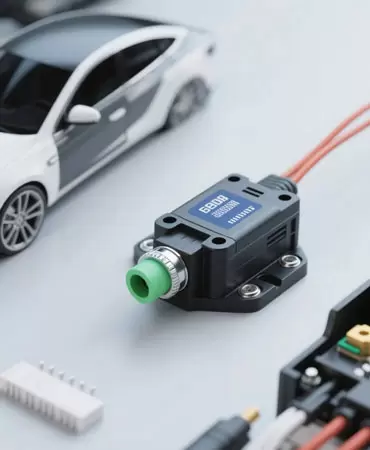
Modern vehicles rely on numerous sensors, including radar, LiDAR, cameras, and environmental sensors. Structural adhesives securely attach sensor elements to housings, ensuring alignment accuracy and protection against vibration and environmental factors.
Battery packs, inverters, and power control units require adhesives for:
Cell-to-cell bonding in modules
Securing printed circuit boards
Insulating thermal interface materials
Supporting lightweight housing assemblies
This ensures both structural integrity and enhanced thermal performance.
Structural adhesives are used to assemble:
Touchscreens
Instrument clusters
Control panels
They reduce rattling, provide seamless design aesthetics, and prevent detachment under repeated use.
ADAS and autonomous systems integrate multiple sensors and processors. Adhesives allow secure and precise mounting, critical for:
Maintaining sensor alignment
Ensuring vibration resistance
Facilitating lightweight design of sensor housings
Epoxies offer excellent mechanical strength, chemical resistance, and thermal stability, making them suitable for structural bonding in battery modules, sensors, and control units. They can withstand high temperatures and provide superior adhesion to metals, plastics, and composites.
Polyurethanes provide flexibility and impact resistance, making them ideal for vibration-sensitive electronics. They are commonly used in dashboard assemblies, sensor housings, and electronic covers.
Silicones are highly heat-resistant, flexible, and electrically insulating, making them perfect for bonding sensitive components that generate or are exposed to heat, such as inverters and power electronics.
Hybrid adhesives combine the properties of epoxy and polyurethane or silicone, offering mechanical strength, flexibility, and thermal stability in one system, suitable for multi-material assemblies.
With the increase in power density and fast-charging EV batteries, adhesives are required to maintain adhesion at elevated temperatures, sometimes above 200°C.
Adhesives are now being engineered to combine:
Structural bonding
Electrical insulation
Thermal conductivity
Flame retardancy
This multifunctionality reduces the need for additional materials, saving space and weight.
For high-volume automotive manufacturing, adhesives must be compatible with automated dispensing systems, UV curing, or fast-curing formulations to maintain production efficiency.
There is growing demand for low-VOC and recyclable adhesives to meet environmental regulations while supporting lightweight vehicle design.
While structural adhesives offer numerous advantages, automotive manufacturers must consider:
Surface preparation: Proper cleaning and priming of substrates are critical for reliable adhesion.
Curing process: Adhesive selection must match the available curing method (heat, UV, or room temperature) and production speed.
Material compatibility: Adhesives must bond dissimilar materials without causing chemical degradation or stress.
Long-term durability: Adhesive performance under thermal cycling, vibration, moisture, and chemical exposure must be tested rigorously.
As automotive electronics become increasingly sophisticated, the demand for reliable, durable, and high-performance assembly solutions has never been higher. Structural adhesives play a pivotal role in this transformation, offering superior mechanical strength, thermal stability, vibration damping, environmental protection, and design flexibility. From battery modules and power electronics to sensors, infotainment systems, and autonomous driving components, adhesives enable automotive manufacturers to produce safer, lighter, and more reliable vehicles.
In the era of electrification and autonomous driving, structural adhesives are not merely a bonding solution—they are a strategic technology that ensures the integrity, performance, and longevity of automotive electronic systems. Manufacturers who leverage these advanced materials effectively gain a competitive edge in safety, reliability, and vehicle efficiency.
Polyton, as a professional manufacturer and supplier of high-performance structural adhesives, specializes in providing advanced bonding solutions for automotive electronic components. Leveraging extensive expertise in heat-resistant, vibration-damping, and flame-retardant adhesives, Polyton supports manufacturers in enhancing the safety, reliability, and durability of battery modules, sensors, infotainment systems, and autonomous vehicle electronics, enabling lightweight and high-performance automotive designs.


 Language
 Email
Email WhatsApp